
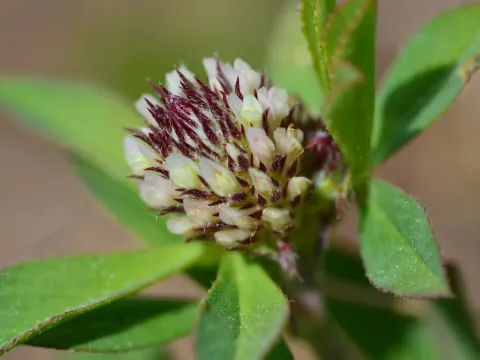
Boccone's clover
Trifolium bocconei
Boccone's clover (Trifolium bocconei) belongs to the Fabaceae family. It is an annual herbaceous plant native to the Mediterranean region, extending into parts of Europe and Western Asia.
What the section contains
Boccone's clover
The crop thrives in temperate climates and prefers well-drained sandy or loamy soils. It requires neutral to slightly acidic soil conditions to reach its full development potential.
Botanically, this species is recognized by its erect stems and distinctive, dense, ovate flower heads. The leaves are trifoliate, which is a common characteristic of the Trifolium genus.
One of the key agronomic advantages of this clover is its high drought tolerance. It is well-adapted to regions with irregular rainfall patterns where other clover species might struggle to survive.
Boccone's clover plays an important role in soil improvement through nitrogen fixation. By forming symbiotic relationships with rhizobia, it increases soil fertility, making it a valuable rotation crop.
Sowing is typically performed in the autumn to align with the plant's natural growth cycle in Mediterranean environments. Spring sowing is possible in cooler regions provided the soil has warmed up sufficiently.
Seed rate calculations are essential for establishing healthy stands. The seeding density should be tailored based on whether the goal is biomass production or soil improvement through cover cropping.
Seeds have a hard coat, so scarification is recommended to improve germination rates. This ensures that the seeds sprout uniformly and establish themselves quickly after being sown.
The optimal planting depth is shallow, usually around 1 centimeter. After sowing, compacting the soil surface ensures better seed-to-soil contact, which is vital for moisture uptake.
Providing consistent moisture during the germination phase is critical for the initial growth of the root system, which later allows the plant to withstand dry conditions during the season.
While the biomass yield is moderate compared to intensive forage crops, Boccone's clover is highly regarded for its nutritional value and high protein content for livestock.
It is excellent for inclusion in pasture mixes, as it recovers well after moderate grazing. Animals find it highly palatable throughout its growing cycle, including the flowering stage.
The plant contributes to the overall stability of grazing lands. Its ability to thrive in poor soils makes it an economically viable option for extensive livestock farming systems.
By integrating Boccone's clover into grazing rotations, farmers can enhance the long-term productivity of their land while minimizing the need for synthetic nitrogen fertilizers.
Total yield is dependent on the local climate and agricultural management, but this species maintains consistent production even when soil conditions are less than optimal.
The primary threats include fungal diseases such as leaf spots and rust, which often appear during periods of high humidity and poor air circulation within the field.
Pests such as clover weevils can cause significant damage to the foliage, while soil-borne nematodes may target the roots, reducing the overall vigor of the clover stand.
Maintaining a proper crop rotation interval of at least three to four years is essential to prevent the buildup of soil pathogens that specifically target legumes.
Integrated pest management, including the use of healthy seeds and weed control in the early growth stages, is the most effective way to protect the crop from severe outbreaks.
Chemical intervention should be considered a last resort. Emphasis should be placed on cultural practices, such as choosing well-drained sites and ensuring optimal plant spacing.
For hay production, the harvest should occur at the full flowering stage when the concentration of nutrients in the plant tissues is at its peak for optimal feed quality.
Quick drying after cutting is necessary to preserve the green color and protein content, and to prevent fungal growth or nutrient leaching caused by rain exposure.
When used as pasture, grazing management must be carefully regulated to avoid overgrazing, ensuring that enough plant cover remains for regrowth and possible seed production.
Seed harvesting should take place when the pods have turned a distinct brown color. This timing is crucial to avoid heavy yield losses due to natural seed shattering.
Post-harvest processing involves cleaning and drying the seeds to a low moisture content, which is necessary to maintain high viability and germination rates during storage.