
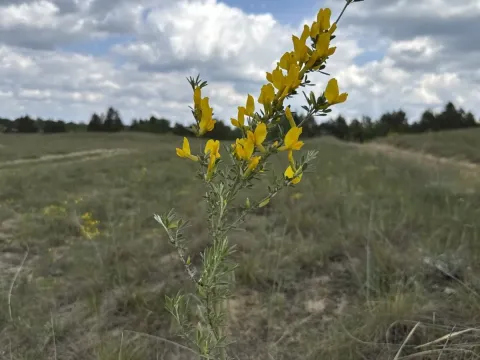
Borysthenian broom
Cytisus borysthenicus
Propagation of the Borysthenian broom is primarily achieved through seeds collected after the pods mature. Seeds typically require stratification or scarification to overcome their hard seed coat and improve germination rates in a nursery setting.
What the section contains
Borysthenian broom
Sowing should take place in well-drained, sandy substrates to mimic the plant's natural habitat. Consistent moisture is required until the seedlings are established, though the substrate must remain aerated.
Cuttings represent another viable method, using semi-hardwood stems during the summer months. Applying rooting hormones can significantly increase the success rate of propagation for this specific species.
Weed control is essential during the first season of growth, as the young plants grow relatively slowly and can be easily outcompeted by more aggressive field weeds.
Transplanting into the permanent location should be timed to avoid heat stress, ideally during the spring before the active growth phase begins or in early autumn.
Cytisus borysthenicus, a member of the Fabaceae family, is a resilient deciduous shrub native to sandy steppes and regions along the Dnieper River, adapted to harsh environmental conditions.
The plant thrives in full sun exposure and is highly intolerant of shade. It acts as an excellent stabilizer for sandy soils, often utilized in erosion control and land reclamation projects.
Soil requirements are specific: the plant demands excellent drainage and light texture. It is highly drought-tolerant once established and does not thrive in compacted, clay-heavy, or waterlogged soils.
This species is well-adapted to wide temperature fluctuations, showing significant winter hardiness within its native range, provided it is planted in well-drained locations.
Nutrient requirements are modest; the plant is capable of surviving in nitrogen-poor soils, which makes it an ideal candidate for low-maintenance landscaping and ecological restoration.
The primary concern regarding the health of Borysthenian broom is susceptibility to powdery mildew, which can occur if plants are situated in areas with poor air circulation or excessive humidity.
Aphids are the most common insect pests, often attacking the tender new growth during the spring. Monitoring and, if necessary, localized treatment can mitigate these infestations.
Leaf-chewing insects may cause cosmetic damage to the foliage, but they rarely pose a terminal threat to healthy, mature shrubs provided the plant environment is managed correctly.
Proper pruning is a vital cultural practice to maintain plant vigor, promote better air circulation, and remove any dead or diseased wood that could harbor pathogens.
Maintaining a balanced moisture level and avoiding nitrogen-heavy fertilizers helps prevent weak, succulent growth that is more attractive to pests and susceptible to secondary fungal infections.