
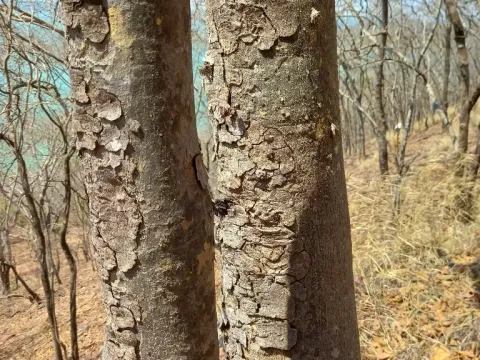
Brachystegia
Brachystegia
Brachystegia is a genus of trees in the pea family, Fabaceae (subfamily Caesalpinioideae). These trees are the defining component of the miombo woodlands, which cover vast areas of central and southern Africa, playing a vital role in regional carbon sequestration.
What the section contains
 Brachystegia boehmii
Brachystegia cynometroides
Brachystegia cynometroides
Brachystegia boehmii
Brachystegia boehmii
Brachystegia cynometroides
Brachystegia cynometroides
 Brachystegia eurycoma
Brachystegia laurentii
Brachystegia laurentii
Brachystegia leonensis
Brachystegia leonensis
Brachystegia eurycoma
Brachystegia eurycoma
Brachystegia laurentii
Brachystegia laurentii
Brachystegia leonensis
Brachystegia leonensis
 Brachystegia longifolia
Brachystegia mildbraedii
Brachystegia mildbraedii
Brachystegia longifolia
Brachystegia longifolia
Brachystegia mildbraedii
Brachystegia mildbraedii
 Brachystegia nigerica
Brachystegia nigerica
Brachystegia nigerica
 Brachystegia randii
Brachystegia randii
Brachystegia randii
 Brachystegia spiciformis
Brachystegia spiciformis
Brachystegia spiciformis
Brachystegia
The culture thrives in tropical environments characterized by a distinct wet and dry season. It is well-adapted to nutrient-poor soils, including sandy, stony, or lateritic substrates where other woody species struggle to establish, highlighting its ecological resilience.
Environmental requirements include an annual rainfall ranging from 700 to 1200 mm. Brachystegia is highly drought-tolerant, utilizing a deep root system to access water during the extended dry season, which allows it to dominate the local savanna landscape.
Botanically, the trees are known for their pinnate leaves and dehiscent pods. They provide excellent canopy cover, protecting the soil from erosion and supporting diverse understory flora. The growth pattern is generally upright, providing high-quality timber structure.
Economic uses are diverse, ranging from general construction timber to the production of high-quality charcoal. The tree is also highly valued in apiculture, as it serves as a primary nectar source for bees throughout the miombo ecoregions.
Wildfires represent the primary threat to Brachystegia forests. While the trees exhibit some fire tolerance as they mature, frequent and uncontrolled burning cycles in the savanna limit the regeneration of seedlings and saplings in the ecosystem.
The species can be affected by root pathogens, particularly under conditions of poor soil aeration or waterlogging. Fungal leaf spots are common in humid conditions but rarely cause catastrophic loss to mature stands of the trees.
Pests such as stem-boring insects and termites present a significant challenge, especially for younger trees or those weakened by environmental stress. These infestations can compromise the integrity of the wood, reducing its commercial value.
Human activities, specifically land clearing for subsistence agriculture and charcoal production, are the leading causes of habitat loss. Sustainable management practices are essential to balance the economic needs of local populations with forest conservation.
To ensure the long-term viability of Brachystegia populations, it is necessary to implement integrated pest management and fire prevention strategies. Protecting natural regeneration corridors is the most effective approach to maintaining the species' distribution.