
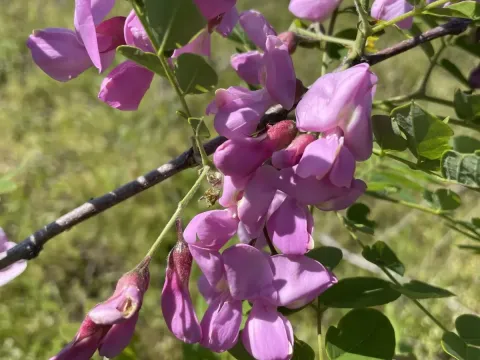
Boynton's locust
Robinia boyntonii
Boynton's locust (Robinia boyntonii) is an attractive deciduous shrub belonging to the Fabaceae family. Native to the southeastern United States, it is primarily valued for its distinct, vibrant pink-purple flowers that bloom in the late spring.
What the section contains
Boynton's locust
Botanically, the plant usually grows as a dense, suckering shrub, reaching heights of 2 to 4 meters. Its pinnate leaves create a delicate texture, making it a popular choice for informal hedges or as a specimen plant in landscape gardens.
The shrub thrives best in full sun exposure, although it can tolerate partial shade in warmer climates. Sufficient sunlight is crucial for maintaining the plant's shape and ensuring a prolific display of flowers.
Regarding soil requirements, Boynton's locust prefers well-drained, slightly acidic to neutral soil types. It demonstrates high adaptability to various soil structures, but it avoids waterlogged sites which can lead to root system decay.
Maintenance involves minimal pruning to manage the shrub's habit and remove dead or diseased branches. It is generally hardy, but establishing the plant requires consistent watering during its first year of growth until the roots are well-established.
Common diseases affecting this shrub include powdery mildew and leaf spot fungi, which typically occur during periods of high humidity and poor air circulation.
Pests such as aphids and scale insects may infest the foliage and succulent stems, causing stunted growth and yellowing of the leaves if left untreated.
Monitoring the plant for early signs of infestation is essential for effective control and the preservation of the shrub's ornamental value.
Applying dormant sprays and using horticultural oils can help manage populations of overwintering pests before the growing season begins.
Maintaining proper hygiene by clearing away fallen leaf debris around the base of the shrub significantly reduces the likelihood of overwintering pathogens.