
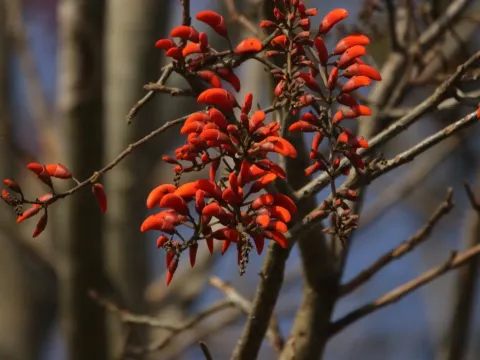
Brazilian coral tree
Erythrina falcata
Erythrina falcata, commonly known as the Brazilian coral tree, is a deciduous tree species belonging to the Fabaceae family. Native to the tropical regions of South America, it is particularly well-adapted to the gallery forests and riverine environments of Brazil and Argentina.
What the section contains
Brazilian coral tree
This species is valued in agroforestry for its biological nitrogen fixation capability, which enriches the surrounding soil. It acts as an excellent component in reforestation projects and provides significant shade in agricultural systems.
The tree thrives in deep, well-drained fertile soils and requires significant sunlight to reach its full development potential. While it prefers consistent moisture, it is relatively tolerant of seasonal flooding, a common feature of its natural floodplain habitat.
Climatically, it favors warm, frost-free environments where humidity remains high throughout the growth season. When cultivated in more temperate zones, it requires protection from severe cold, as frost can damage the distal branches of young trees.
Beyond its ecological benefits, the Brazilian coral tree is highly prized as an ornamental plant due to its striking, sickle-shaped flowers that attract a variety of pollinators, including birds and bees. Its lightweight wood is sometimes utilized for small-scale woodcraft.
The Brazilian coral tree is susceptible to several insect pests, particularly lepidopteran larvae that can cause significant defoliation. Regular monitoring is essential to detect outbreaks early before they affect the overall vigor of the tree.
Mite infestations, particularly spider mites, are common during periods of extreme heat and drought. These pests cause chlorosis and leaf drop, which can significantly weaken young saplings if left unmanaged.
Fungal pathogens associated with root rot and leaf spot are potential threats if the soil is poorly drained or if the tree is subjected to excessive moisture. Ensuring proper site selection with excellent drainage is the primary defense against these pathogens.
Sanitary pruning is a critical practice for maintaining tree health and reducing pathogen load. Removing dead or diseased branches allows for better air circulation and sunlight penetration within the canopy, preventing fungal growth.
Effective pest and disease management relies on an integrated approach, combining good cultural practices with targeted treatments when necessary. Encouraging natural predators, such as beneficial insects, is a sustainable way to keep pest populations at bay.