
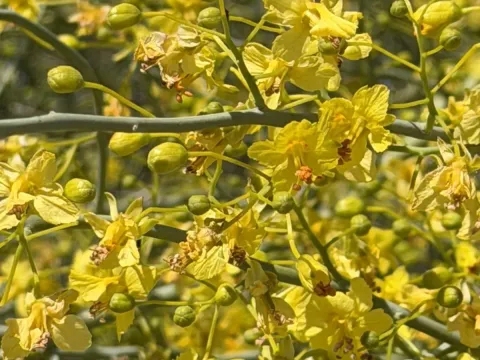
Blue palo verde
Parkinsonia florida
Blue palo verde (Parkinsonia florida) is a hardy perennial tree belonging to the Fabaceae family. Native to the arid regions of the Southwestern United States and Northern Mexico, this species has evolved to thrive in environments with sparse precipitation and extreme solar radiation.
What the section contains
Blue palo verde
The plant demonstrates remarkable adaptability to various soil types, provided they offer excellent drainage. It prefers sunny locations and is highly tolerant of heat, making it an ideal candidate for xeriscaping and reclamation projects in desert or semi-desert geographic zones.
Botanically, the tree is defined by its smooth, blue-green photosynthetic bark, which continues to produce energy even during periods of drought-induced leaf drop. Its compound, bipinnate leaves are structurally optimized to minimize water loss through transpiration during the hottest months of the year.
In terms of agricultural and landscape usage, the Blue palo verde is prized for its aesthetic value, featuring brilliant yellow blossoms that emerge in spring. Furthermore, its root system contributes significantly to soil stabilization, helping to prevent erosion in vulnerable arid environments.
Cultivation practices are relatively straightforward, focusing mainly on the initial establishment phase. Once the root system is well-developed, the tree requires minimal irrigation and little to no fertilization, making it a low-maintenance choice for sustainable landscaping in arid climates.
Potential threats to Parkinsonia florida include soil-borne pathogens and root rot, which are primarily induced by overwatering or poor drainage. While some pests such as beetles may occasionally affect the foliage, these instances are typically manageable and rarely pose a fatal threat to healthy, mature trees.