
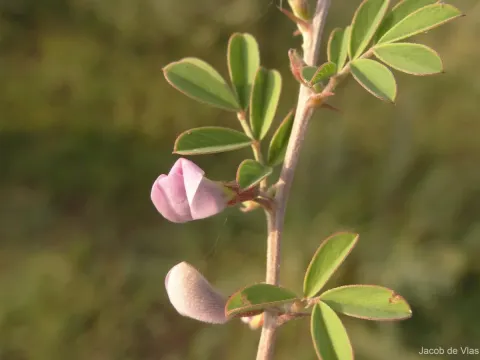
Tephrosia spinosa
Tephrosia spinosa
Sowing of Tephrosia spinosa is typically performed at the beginning of the rainy season when soil temperatures remain stable between 20-25°C. April to May is the preferred window for establishing new stands.
What the section contains
Tephrosia spinosa
Seeds have a hard coat and require pre-sowing scarification to improve germination rates. The optimal planting depth ranges from 2 to 4 centimeters depending on the soil structure.
Row planting with an spacing of 40-50 centimeters is recommended to ensure adequate density and to suppress weed competition during the early establishment phase.
Seedlings typically emerge within 10-15 days, provided the soil moisture is kept at appropriate levels. Early management is critical to ensure the crop establishes without competition.
The plant exhibits vigorous early growth, which allows it to form an effective protective soil cover shortly after germination.
Tephrosia spinosa is a member of the Fabaceae family and is highly valued for its nitrogen-fixing capabilities. It is a drought-tolerant species that thrives in poor, sandy, and stony soils.
The plant requires full sun exposure and performs poorly in shaded environments. A key requirement is well-drained soil, as the crop is sensitive to waterlogging and poor aeration.
The optimal pH range for this species is between 5.5 and 7.5. It is capable of enduring high heat and various environmental stressors, making it suitable for tropical climates.
Agronomic management is minimal due to the plant's robust root system, which helps loosen compacted soil and improves overall soil physical structure over time.
Its resilience makes it a promising candidate for restorative agriculture and land reclamation projects in degraded areas.
The yield of green biomass depends on planting density and soil fertility. Under optimal conditions, the crop produces a significant amount of organic matter.
As a green manure crop, it can accumulate between 100-150 kg of nitrogen per hectare per season, providing a substantial boost to follow-up crops in a rotation system.
Seed harvesting should be timed carefully before the pods dry out completely to prevent natural shattering and seed loss. Harvesting is usually performed when most pods are mature.
Biomass production typically ranges from 15 to 30 tons per hectare, depending on moisture availability and the frequency of harvests performed during the growth cycle.
While used primarily for soil enhancement, the plant can be utilized as fodder, provided that proper heat treatment is applied to reduce the content of secondary metabolites.
Common pests affecting the crop include various species of weevils and aphids that target young shoots. During the flowering stage, caterpillars may feed on the flower buds.
Fungal diseases, such as root rot, can occur in poorly drained soils with excess moisture. Preventing water stagnation is the most effective way to minimize these risks.
Powdery mildew may develop in dense plantings under high humidity. Maintaining adequate row spacing to improve airflow significantly reduces the risk of this fungal issue.
Integrated pest management, focusing on biological controls, is recommended for industrial plantations to protect the symbiotic bacteria responsible for nitrogen fixation.
Weed competition is only a significant threat during the initial stages of crop growth, as the plant quickly establishes dominance over competing weeds later on.
For green manure purposes, the biomass should be harvested at the onset of flowering, as this is when the nitrogen content in the tissues is at its peak.
Seed collection is performed mechanically or manually once 70-80% of the pods show maturity. Collected seeds must be thoroughly dried to ensure long-term viability during storage.
When harvesting for forage, it is crucial to avoid collecting overly woody stems, which decrease palatability and digestibility for livestock.
Correct cutting heights must be maintained to ensure the plant can regenerate from buds, especially if the stand is intended to be harvested multiple times.
Root remnants left in the soil after harvesting contribute significantly to organic matter content and foster beneficial soil microbial activity.