
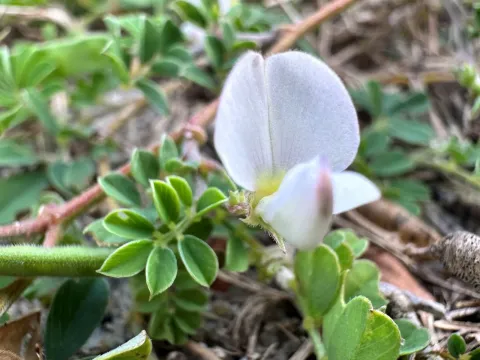
Tephrosia pumila
Tephrosia pumila
Tephrosia pumila is a thermophilic plant, so planting times depend on the soil warming up to at least 18-20 degrees Celsius. In tropical and subtropical regions, sowing is typically carried out at the beginning of the rainy season to ensure uniform germination.
What the section contains
Tephrosia pumila
For successful vegetation, seeds require preliminary scarification, as they have a dense seed coat that slows down emergence. The optimal sowing depth is 2-3 centimeters, depending on the soil texture and moisture availability.
When planting, it is necessary to maintain a distance of 40 to 60 centimeters between rows, which allows the plant to fully develop its vegetative mass. Sowing density should take into account soil fertility and the water holding capacity of the site.
In professional cultivation, precision seed drills can be used if the seed material has been cleaned and calibrated. It is critical to avoid waterlogging during the germination period, as this leads to seed rot.
After sowing, it is recommended to roll the field to improve seed-to-soil contact and retain capillary moisture in the root zone for better establishment.
As a member of the Fabaceae family, this plant demonstrates high resistance to drought once it has established its primary root system. It prefers well-drained sandy or sandy-loam soils with a neutral to slightly acidic pH level.
The crop is extremely sensitive to water stagnation; therefore, fields with high water tables or heavy clay soils are unsuitable for cultivation. Poor drainage often leads to rapid death of the root system due to the development of anaerobic conditions.
Optimal photosynthesis and nitrogen fixation in symbiosis with root nodule bacteria require high solar radiation. The plant does not tolerate shading, which significantly reduces its productivity and overall biomass.
The temperature regime should remain between 22 and 30 degrees Celsius during the day. Sudden night frosts or cold snaps are fatal for the plants at any stage of development.
The crop responds well to phosphorus and potassium fertilization, which promotes stronger root development and supports the biological fixation of atmospheric nitrogen.
The green biomass yield of Tephrosia pumila varies depending on the climatic zone and the intensity of agricultural practices. On average, one hectare can produce between 10 and 15 tons of fresh biomass under sufficient moisture conditions.
When using the crop as green manure, it is important to mow before the stems become woody, ensuring rapid decomposition of the mass in the soil. This process effectively enriches the topsoil with organic matter and available nitrogen.
Seed productivity depends on the effectiveness of insect pollination. Under favorable conditions, one hectare of crops can yield up to 0.5-0.8 tons of high-quality seed material.
Yield stability is directly linked to the activity of symbiotic nitrogen-fixing microorganisms in the soil. Inoculating seeds with specialized Rhizobia strains can increase biomass production by 20-30 percent.
Maximum productivity levels are achieved through continuous cultivation on the same plots with crop rotation, which prevents the build-up of specific soil-borne pathogens.
The main threats to the crop are fungal root diseases caused by waterlogged soil conditions. Root rot can quickly destroy young stands if moisture management is not strictly controlled.
Common pests include species of weevils and aphids, which damage young leaves and growing points. Aphid infestations are frequently associated with the spread of viral infections that weaken the plant's overall vigor.
Disease control involves the use of systemic fungicides at early stages; however, ecological standards favor preventive measures. Maintaining spatial isolation from known sources of infection is a key management strategy.
Pest populations are often managed through an integrated pest management (IPM) system, including the use of beneficial insects or biopesticides. Chemical insecticides are reserved for cases where economic injury levels are exceeded.
Powdery mildew may also occur in high humidity conditions, requiring timely thinning of the plants and improved air circulation within the canopy.
Harvesting for green manure is conducted during the mass flowering phase when the plant contains the highest concentration of nitrogen in its tissues. This is the optimal time to incorporate the crop into the soil as a fertilizer.
To harvest seeds, it is necessary to wait for the pods to reach full maturity, indicated by a brown or dark color. Avoiding delayed harvesting is crucial, as the pods of Tephrosia are prone to spontaneous splitting and seed shattering.
Mowing is typically performed mechanically using rotary mowers. The cut biomass can be shredded to accelerate decomposition in the soil or harvested for further industrial use.
For seed production, direct combining or windrowing followed by drying is used. Windrowing is preferred in high-humidity areas to prevent crop losses due to pod rotting during the post-harvest period.
After harvesting, seeds must be dried thoroughly in well-ventilated conditions and stored in airtight containers to prevent damage from storage pests and to maintain high germination rates.