
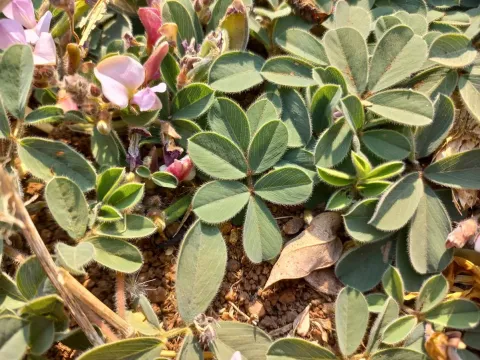
Tephrosia radicans
Tephrosia radicans
Tephrosia radicans belongs to the Fabaceae family. It is a perennial herbaceous plant recognized by its spreading, prostrate habit, where stems readily take root at the nodes when they touch moist soil.
What the section contains
Tephrosia radicans
Sowing should be scheduled during the warm season, ensuring soil temperatures are consistently high to support rapid germination and initial seedling establishment.
Seeds are characterized by a hard seed coat, which typically requires scarification or soaking in warm water for several hours to improve germination rates significantly.
The optimal planting depth is approximately 2–3 cm, with row spacing adjusted to allow for the plant's spreading nature, which effectively covers the soil surface over time.
Early-stage weed management is essential for the crop. Once established, the dense growth habit of the plant typically outcompetes surrounding weeds, reducing the need for mechanical weeding.
As a plant native to tropical and subtropical climates, it thrives in warm environments with moderate to high rainfall patterns and ample sunlight exposure.
It prefers well-drained soils, ranging from sandy loam to clay loam, and exhibits tolerance to various soil types provided they are not waterlogged for extended periods.
The plant is highly valued for its ability to fix atmospheric nitrogen through symbiosis with Rhizobium bacteria, which improves soil fertility for subsequent crops.
Exposure to full sun is critical for maximizing biomass production and ensuring robust stem growth, as shade inhibits the plant's natural spreading capability.
It displays reasonable drought tolerance due to its deep root system, making it a potentially useful species for soil stabilization and moisture retention in dry regions.
Fungal diseases, including leaf spots and root rots, represent the most significant threat, particularly in regions with high humidity and poor airflow among plant clusters.
Insect pests such as leaf-feeding beetles and caterpillars can cause economic damage if infestations occur during the active vegetative growth phase of the plant.
Preventive measures include implementing diverse crop rotations and ensuring proper spatial distribution of plants to maintain adequate air circulation and reduce microclimate humidity.
Root diseases are often linked to poor drainage; therefore, selecting fields with natural slopes or incorporating soil amendments can mitigate these risks effectively.
Regular field scouting is recommended to detect the presence of pests early, allowing for integrated pest management (IPM) strategies to be applied effectively.