
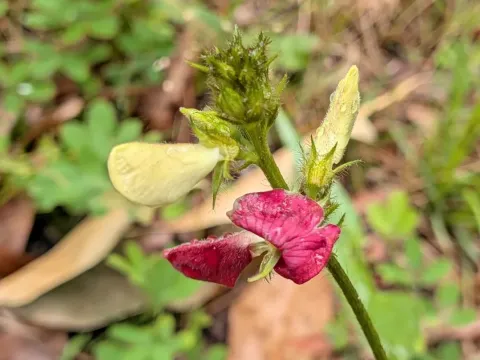
Tephrosia spicata
Tephrosia spicata
Tephrosia spicata is a perennial legume recognized for its significant contribution to nitrogen fixation and soil health enhancement. Its deep taproot system allows it to access subsoil nutrients and improve overall soil structure through biological tillage.
What the section contains
Tephrosia spicata
The seeds of this species possess a hard seed coat, which necessitates scarification to ensure uniform and rapid germination. Sowing should be timed with the onset of warm, moist conditions to provide the seedlings with a strong start and prevent moisture stress.
Recommended sowing density involves moderate spacing to balance the rapid ground coverage of the plant with the need for adequate air circulation. Planting at a depth of 2-3 cm is generally sufficient in well-prepared, loose seedbeds.
In the initial growth stages, the plant requires protection from weed competition until it establishes its root system. Once the canopy closes, the plant becomes highly effective at suppressing most common annual weeds in the field.
Proper inoculation with specific rhizobia bacteria may be necessary in soils where the plant has not been grown previously to ensure maximum nitrogen fixation efficiency. This symbiotic relationship is the cornerstone of the plant's agronomic utility.
This crop thrives in well-drained, sandy or loamy soils and is generally intolerant of waterlogged conditions. Excessive soil moisture can lead to root rot and anaerobic soil environments that inhibit the activity of beneficial microbes.
Tephrosia spicata requires full sunlight to achieve its maximum biomass potential. It does not perform well in shaded areas, where plant growth becomes stunted and the development of reproductive organs is significantly delayed.
As a tropical and subtropical species, it is highly sensitive to frost and chilling temperatures. The optimal growth occurs in environments with warm days and nights, making it unsuitable for cultivation in temperate climates with cold winters.
The crop is relatively drought-tolerant once established, thanks to its deep root system. However, for maximum biomass production, supplemental irrigation during prolonged dry spells can lead to significantly higher yields and better stand persistence.
The plant shows good tolerance to acidic soil conditions, common in many tropical regions. However, providing adequate levels of phosphorus and potassium is essential to support the nitrogen fixation process and rapid stem elongation.
Root-knot nematodes can be a limiting factor in intensive cultivation systems, causing stunted growth and yellowing of the foliage. Crop rotation with non-host species is the primary management strategy for maintaining soil health.
Fungal pathogens such as Fusarium or Rhizoctonia may occur in overly damp, compacted soils. Ensuring proper drainage and avoiding high-density sowing are the most effective preventive measures against these soil-borne diseases.
Leaf-feeding insects can cause damage during the seedling stage, potentially reducing stand density. Regular monitoring is advised, and integrated pest management (IPM) should be practiced to keep populations below the economic threshold.
Viral infections may manifest as mosaic patterns on the leaves, leading to reduced photosynthetic capacity. Since insect vectors are usually responsible for spread, controlling aphid or whitefly populations is crucial for maintaining a healthy crop.
In some regions, bruchid beetles may infest the seeds during maturation or storage. Prompt harvesting and proper seed treatment are necessary to preserve seed quality and prevent high levels of post-harvest loss.
The harvesting of biomass as a green manure or mulch is best performed at the flowering stage. At this phenological point, the nutrient concentration in the tissues is balanced, and the plant provides the maximum benefit to the soil.
When intended for fodder, harvesting should occur before the stems become overly lignified to ensure high digestibility and protein content for livestock. Multiple cuts per season may be possible under ideal moisture and temperature conditions.
Seed harvesting should be timed carefully to avoid pod shattering, which is a common trait in many wild legume species. Harvesting when the majority of pods turn from green to brown usually minimizes potential yield losses.
Post-harvest management of residues involves either incorporating them into the soil for nutrient cycling or using them as organic mulch. Both methods contribute to the long-term sustainability of the cropping system by recycling essential minerals.
After threshing and cleaning, seeds must be dried to a low moisture content to prevent fungal growth during storage. Keeping seeds in cool, dry conditions is vital for maintaining high germination rates for future planting cycles.