
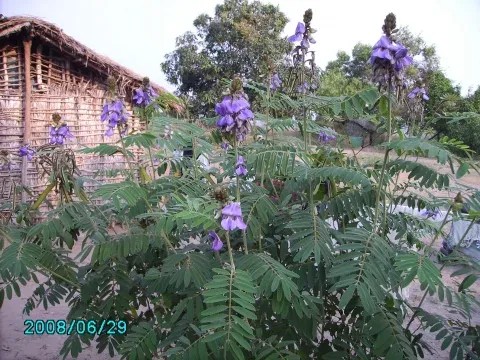
Tephrosia senna
Tephrosia senna
Tephrosia senna seeds are typically sown once the soil temperature consistently exceeds 20 degrees Celsius. In tropical regions, the onset of the rainy season is the ideal time for sowing to ensure successful germination and early establishment.
What the section contains
Tephrosia senna
Seed preparation often involves scarification, as the hard seed coat can otherwise delay emergence. Seeds are sown at a depth of 2 to 3 centimeters to ensure good contact with the moist soil substrate.
Sowing density depends on the specific objective, such as biomass production or soil restoration. Row spacing is generally kept at 40 to 50 centimeters to allow adequate airflow and light penetration for the growing plants.
The crop displays vigorous early growth, which helps in suppressing weeds during the critical development phase. Uniform distribution of seeds is essential for obtaining a dense and competitive stand across the field.
Seedlings typically emerge within 10 to 15 days, provided that soil moisture is adequate. It is crucial to keep the area clear of competing weeds during the first few weeks of life while the plant establishes its root system.
Tephrosia senna is a resilient legume valued for its adaptability to challenging environments. It thrives in sunny locations and is highly sensitive to shade, which can cause stunted growth or weak, elongated stems.
In terms of soil requirements, the plant is moderately demanding but performs best in light, well-drained sandy or loamy soils with a neutral to slightly acidic pH level.
The species is remarkably drought-tolerant, owing to its deep taproot system, which allows it to survive in regions with erratic rainfall patterns and poor soil conditions.
A major agricultural benefit is its ability to perform biological nitrogen fixation. By forming symbiotic relationships with nodule bacteria, the plant enriches the soil with nitrogen, making it an excellent crop for rotation.
Waterlogging is detrimental to the plant, as poor drainage can lead to root rot. Therefore, selecting sites that are free from prolonged standing water is essential for successful cultivation.
The yield of green biomass depends significantly on soil fertility and management practices. Under optimal conditions, the plant can produce a substantial volume of vegetation within a relatively short period.
Accumulation of organic matter is the primary reason for using this crop as green manure. It is best to incorporate the biomass into the soil during the peak flowering stage to maximize nutrient levels.
In industrial farming, biomass yields can reach 20 to 30 tons per hectare, significantly improving soil structure and organic content. This contributes to long-term land productivity.
Seed yields can vary due to the plant's extended flowering period. Timely harvesting of the pods before they crack open is necessary to preserve the marketable seed yield.
The application of phosphorus fertilizers can boost overall production, as phosphorus is essential for root development and the activity of nitrogen-fixing bacteria within the nodules.
Like many legumes, Tephrosia senna can be prone to root rot if soil moisture is excessive. Prevention is largely achieved through proper site selection and managing irrigation to avoid waterlogging.
Insects, particularly weevils and certain types of caterpillars, may feed on the leaves. If infestations become severe, the application of biological pesticides is recommended to protect the crop health.
Seed-boring beetles can damage the pods during maturation, which reduces seed viability. Regular field scouting is crucial for early detection and management of potential pest outbreaks.
Weed competition during the initial growth stages poses a significant threat to yields. Mechanical or manual weeding is recommended until the crop canopy closes and begins to shade out competing vegetation.
Abiotic factors, including extreme temperature fluctuations during the flowering period, can interfere with pod set. Maintaining a stable environment is key to maximizing the reproductive success of the plant.
The harvest of green biomass should take place at the start of the flowering phase. This is when the plant has stored the maximum amount of nitrogen and biomass in its tissues.
When harvesting for seeds, farmers wait until the pods turn brown. Because the pods are prone to shattering, it is vital to complete the harvest promptly once technical maturity is reached.
After the harvest of the aerial parts, the root system remains in the soil. Its slow decomposition continues to release nutrients and improve soil structure for subsequent crops.
Seeds require thorough drying in the shade after harvesting to ensure longevity and prevent fungal growth. Storage must be done in a cool, dry, and well-ventilated location to maintain high germination rates.
Mechanical harvesting is possible with specialized machinery for pulse crops. It is important to adjust threshing settings to prevent physical damage to the seeds during the process.