
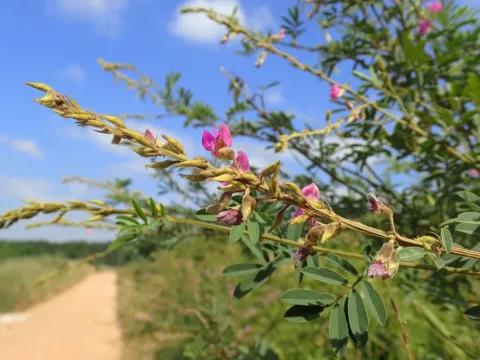
Tephrosia polystachya
Tephrosia polystachya
Tephrosia polystachya is a perennial herbaceous plant or subshrub belonging to the Fabaceae family. This crop is characterized by a strong taproot system and a significant ability to form symbiotic relationships with nitrogen-fixing bacteria, making it a valuable addition to modern crop rotations.
What the section contains
Tephrosia polystachya
The optimal sowing time occurs at the beginning of the rainy season when soil temperatures reach at least 20–25 degrees Celsius. Seeds possess a hard coat, so scarification is highly recommended prior to planting to ensure uniform and rapid germination.
Planting is typically done in rows spaced 30 to 50 cm apart, allowing the plant to optimize its resource use and ground coverage. Seeding rates depend on the final objective; higher densities are preferred when the crop is intended strictly for green manure to suppress weeds.
In regions with distinct seasons, sowing is best performed in spring to ensure the crop develops enough vegetative mass before entering a period of dormancy. A planting depth of 2–3 cm is ideal to maintain sufficient moisture contact for the developing seeds.
Once established, the crop develops its root system rapidly, enabling it to withstand subsequent short periods of water stress. Intensive growth of the aerial part usually begins about 3–4 weeks after initial emergence.
Tephrosia prefers well-drained sandy or loamy soils with a neutral to slightly acidic pH. It performs poorly in waterlogged conditions, so fields with high water tables or poor drainage should be avoided during site selection.
As a light-demanding species, this plant thrives best in open areas without shade. In low-light environments, biomass production drops significantly, and stems tend to become elongated and prone to lodging, which complicates management.
The crop demonstrates high tolerance to heat, making it an excellent candidate for tropical and subtropical agricultural systems. However, temperatures dropping below 10 degrees Celsius can significantly slow down its metabolic processes and overall growth rate.
Despite its inherent drought tolerance, moderate rainfall during the active growth phase is required to maximize biomass yield. During extreme dry spells, the plant may enter a state of dormancy, shedding part of its leaves to preserve vitality.
Soils that are nitrogen-deficient are ideal for this crop, as it actively contributes to soil fertility restoration through atmospheric nitrogen fixation. This process significantly improves the nitrogen status of the soil for subsequent crops.
The primary use of this crop is for green manure, which provides a high-protein organic amendment to the soil. Under favorable conditions, the biomass yield can reach 15–25 tonnes per hectare, depending on the management intensity.
Incorporating this biomass into the soil significantly enriches the topsoil with organic matter and available nitrogen. Once tilled, the biomass decomposes rapidly, improving soil structure and enhancing the nutrient availability for future crops.
In some agricultural sectors, this plant is being studied as a potential forage component for livestock. However, caution must be exercised due to the presence of secondary metabolites, which necessitates careful management when used as animal feed.
The biomass of Tephrosia is rich in proteins, making it a high-quality material for composting processes. Using shredded shoots as mulch between rows of other crops helps retain soil moisture and protects the surface from erosion.
The seed yield is generally stable, allowing farmers to maintain their own supply of planting material. Harvesting is recommended when pods darken, ensuring that collection happens before natural pod dehiscence occurs in the field.
Common issues include leaf spot diseases triggered by fungal pathogens in high-humidity conditions. To prevent these outbreaks, it is crucial to ensure good ventilation within the crop canopy and avoid excessive sowing densities.
Insect pests, such as weevils and certain types of caterpillars, can damage the foliage, thereby reducing photosynthetic efficiency. In cases of high pest pressure, biological control methods utilizing natural predators are recommended.
Root rot represents a serious threat when the crop is cultivated in heavy, poorly drained soils. Symptoms include stunted growth and yellowing of foliage, which often lead to premature plant death if left unmanaged.
Nematode infestations can also impair the root system, negatively impacting the plant's nitrogen-fixing capability. Following a proper crop rotation schedule and allowing sufficient time between legumes in the same field is the best preventative strategy.
- Pre-sowing seed treatment to enhance vigor.
- Active weed control during the early development stages.
- Regular monitoring of soil moisture levels to avoid stress.
- Scouting for early signs of insect pest colonization.
Harvesting for green manure should take place during the peak flowering stage, as this is when the nutrient concentration in the stems and leaves is highest. At this stage, the biomass is succulent and easy to process.
Mowing should be performed at a height of 10–15 cm from the ground surface. This practice encourages faster regrowth (ratooning) and helps maintain the integrity of the root system for perennial applications.
To speed up the decomposition process during incorporation, the biomass should be shredded using disc harrows. Ideally, this should be done 2–3 weeks before planting the subsequent crop in the rotation.
When harvesting for seed production, monitoring pod moisture is critical to prevent storage losses. Modern harvesters can be used, provided that the threshing settings are properly calibrated to prevent seed damage.
Post-harvest residues remain a valuable resource for soil structure development. The remaining root system continues to benefit the soil by improving pore distribution and supporting beneficial soil microbial life for a period after the aerial harvest.