
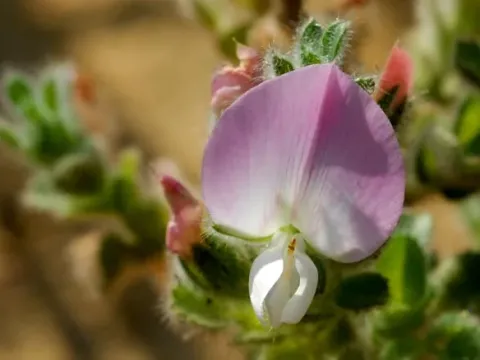
Spiny restharrow
Ononis pinnata
The planting of Spiny restharrow is typically scheduled for early spring once the soil temperatures have reached a stable level to promote seed germination.
What the section contains
Spiny restharrow
Correct seed depth is critical for this species, as it should be planted approximately 1–2 centimeters deep in well-prepared, friable soil to ensure maximum emergence.
Row spacing is usually set between 40 and 50 centimeters to allow for efficient weed management and soil aeration during the early stages of plant growth.
Seeding rates should be adjusted based on seed viability and purity to maintain an ideal plant population density per hectare for optimal yield.
Consistent soil moisture must be maintained following sowing to support the development of the root system, which is the primary value-adding part of the plant.
This crop thrives in open, sunny environments and is highly intolerant of shading, which can significantly reduce the concentration of active medicinal compounds.
Regarding soil preferences, it favors well-drained loamy or black soils that are neutral or slightly alkaline, as it dislikes waterlogged or acidic conditions.
It possesses an impressive degree of drought tolerance thanks to its deep taproot, which allows it to access water reserves in deeper soil layers.
As a nitrogen-fixing legume, it reduces the need for heavy nitrogen fertilization, contributing to sustainable and cost-effective production models.
Temperature fluctuations are generally well tolerated by this plant, although extreme cold during the seedling stage should be avoided for best establishment.
The primary economic focus of this crop is the harvest of roots, which accumulate high levels of medicinal substances as the plant matures over several years.
Yield stability is achieved when the plants are grown in suitable soils and have sufficient space to expand their complex root systems without competition.
Harvesting for commercial production usually begins in the second or third year, when the biomass of the root system reaches its biological peak.
Average yield figures for dried roots depend on climate conditions but can realistically reach 1.5 to 2 metric tons per hectare under ideal circumstances.
Efficient post-harvest processing, including cleaning and drying, plays a decisive role in the final quality and market value of the harvested root crop.
Root rot and fungal pathogens are the most significant threats, often triggered by poor drainage or overly wet growing seasons that promote disease.
Pests like root-feeding weevils can cause substantial damage to the subterranean parts of the plant, negatively impacting plant vigor and development.
Leaf-feeding insects or aphids may appear during the vegetative phase; however, their impact is secondary compared to potential root system damage.
Integrated pest management, focusing on crop rotation and soil health, is the recommended strategy to minimize the need for chemical interventions.
Early detection of infections and maintaining high hygiene standards during field operations are essential for a healthy and profitable crop cycle.
Harvesting is ideally conducted in late autumn, when the aerial parts of the plant have withered, ensuring that all energy is stored in the roots.
Mechanical harvesting involves lifting the soil to remove the roots with minimal breakage, which is vital to preserve the integrity of the collected material.
Post-harvest cleaning must be thorough, involving the removal of all adhering soil and extraneous plant debris before the drying phase begins.
Controlled drying at temperatures not exceeding 45 degrees Celsius ensures that the bioactive chemical profile of the plant remains intact for pharmaceutical use.
Final storage conditions must be dry and cool, as moisture can lead to rapid degradation and molding of the sensitive dried root products.