
Spiny broom
Calicotome villosa
Description
Growing requirements
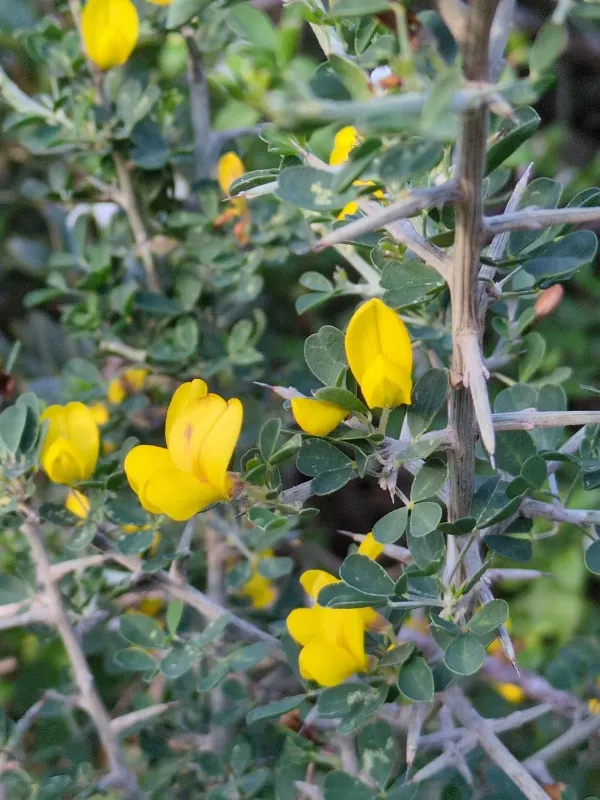
The spiny broom (Calicotome villosa) is a distinctive perennial shrub belonging to the Fabaceae family. Native to the Mediterranean basin, it is widely recognized for its spiny, dense structure and vibrant yellow flowers that appear during the spring season.
This species is highly adapted to arid and semi-arid climates, exhibiting excellent drought tolerance. It thrives in locations with full sun exposure, as sunlight is essential for the development of its dense, woody frame and healthy foliage.
Regarding soil, the spiny broom is undemanding and excels in rocky, calcareous, or sandy soils where other crops might struggle. Superior drainage is the primary requirement for successful cultivation, as the plant cannot withstand waterlogged conditions.
A key biological feature is the plant's ability to engage in nitrogen fixation. By establishing a symbiotic relationship with soil bacteria, the spiny broom effectively enriches the surrounding soil with nitrogen, proving valuable for sustainable land reclamation.
The plant demonstrates good resilience to wind, making it suitable for windbreaks or protective borders in challenging agricultural landscapes. It requires very little maintenance once established, though occasional pruning helps keep its size under control.
Main diseases and pests
The primary threats to Calicotome villosa are pathogens associated with poorly drained soil. Root rot and collar rot are common issues if the plant is subjected to stagnant water, which compromises the integrity of its roots.
Pests such as aphids and specialized leaf-eating beetles can cause stress to the plant. Infestations typically occur during the peak of the growing season, potentially stunting growth if left untreated for extended periods.
Fungal diseases, specifically powdery mildew, may emerge in environments with high humidity and stagnant air. Proper spacing during planting is critical to ensure adequate airflow, which acts as a primary deterrent for these fungal pathogens.
Parasitic plants, such as dodder, can sometimes infest the stems of the spiny broom. These parasites must be manually removed or controlled immediately to prevent them from sapping the host plant of essential nutrients and weakening its structure.
Integrated Pest Management (IPM) practices are recommended for maintaining healthy stands. Periodic inspection and the use of targeted biological controls are preferred to maintain the ecological balance of the area where the shrub is planted.