
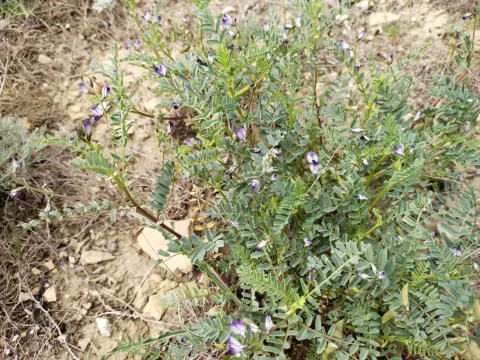
Spotted milkvetch
Astragalus guttatus
Spotted milkvetch (Astragalus guttatus) is a notable member of the Fabaceae family, recognized for its potential as a sustainable forage crop. This perennial legume exhibits strong adaptability to various soil types, making it a valuable candidate for improving productivity in marginal or degraded lands where other crops may struggle.
What the section contains
Spotted milkvetch
Sowing typically occurs in early spring once soil temperatures have reached at least 8–10 degrees Celsius. A well-prepared seedbed is essential to ensure shallow but uniform seed placement, which encourages consistent germination and early root establishment, vital for the plant's long-term success in the field.
Botanically, the species is defined by a robust taproot system that supports resilience against periodic drought. The plants feature erect or semi-erect stems covered with fine hairs, and pinnate leaves, which contribute to a high biomass output suitable for hay production or managed grazing systems.
The agricultural utility of spotted milkvetch centers on its high protein content and its ability to improve soil health through biological nitrogen fixation. As a result, it serves both as an excellent forage source for livestock and as an effective cover crop that builds soil organic matter and fertility for future rotations.
During the first year, management focuses on weed suppression as the plant establishes its root system. Once the stand is established in subsequent years, the crop becomes highly competitive and resilient, requiring very little intervention to maintain a dense, productive canopy that is capable of enduring multiple harvests per season.
Spotted milkvetch thrives in open, sunny environments, as it is highly sensitive to shading. Ensuring full exposure to sunlight is critical for stimulating vegetative growth and maximizing flower development, which is necessary for both biomass accumulation and potential seed production in commercial agricultural settings.
The crop is relatively undemanding regarding soil quality, preferring light sandy or loamy soils with good aeration. Its ability to tolerate mild salinity makes it an ideal plant for reclaiming lands damaged by improper irrigation or excessive fertilization, providing a restorative effect that is hard to achieve with more sensitive legumes.
Climatic requirements are marked by high tolerance for temperature fluctuations and excellent winter hardiness. The species is well-adapted to regions with harsh winters, provided that there is adequate snow cover to protect the crown, and it demonstrates significant endurance during dry summer periods thanks to its deep root architecture.
Water management is focused on avoiding waterlogging, which the plant cannot tolerate. Well-drained soils are mandatory to prevent root rot and ensure that the symbiotic bacteria in the root nodules remain active, facilitating the essential nitrogen fixation process that underpins the crop's nutritional value and fertility benefits.
Fertilization regimes should prioritize phosphorus and potassium to enhance yield and stand longevity. Nitrogen application is usually unnecessary and even counterproductive after the initial establishment phase, as the plant’s biological nitrogen fixation capacity is generally sufficient to meet its developmental needs in most moderate soils.
The primary threat to spotted milkvetch stands is root rot, which typically develops in poorly drained or waterlogged soils. Fusarium and other soil-borne fungi can cause significant stand decline, making site selection and proper field drainage the most effective preventative measures against these destructive pathogens.
Insect pests, such as weevils, can affect both the vegetative foliage and the developing seeds. While the crop is generally hardy, significant outbreaks may require integrated pest management strategies, such as biological controls or targeted application of insecticides, to prevent economic loss during critical growth stages.
Aphids can cause damage by feeding on young shoots, leading to stunted development and leaf curling. Maintaining healthy, vigorous plants through proper soil management is the best defense, though occasional monitoring during warm, humid periods is advised to ensure that pest populations do not exceed thresholds that impact productivity.
Weed competition is a significant concern during the early establishment phase. Slow seedling growth makes the crop vulnerable; therefore, mechanical weeding or early-season mowing is often required to ensure the milkvetch has access to the light and nutrients necessary for rapid development before the canopy closes.
Crop rotation is essential for the sustainable management of this species. By allowing a multi-year gap before replanting Astragalus in the same field, farmers can successfully prevent the buildup of soil-borne pests and maintain the long-term biological health of the production area, ensuring consistent yields over many cycles.