
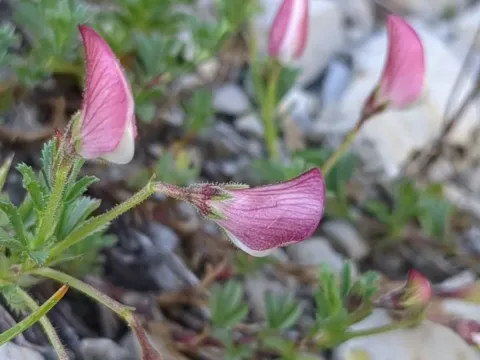
Crested restharrow
Ononis cristata
Crested restharrow (Ononis cristata) is a perennial herbaceous plant belonging to the Fabaceae family. Native to Mediterranean and Central European landscapes, it thrives in dry, sunny environments, often colonizing rocky outcrops and calcareous slopes.
What the section contains
Crested restharrow
This species is well-known for its deep, robust taproot, which allows it to excel in poor, nutrient-deficient soils where other crops might fail. It displays remarkable drought tolerance, making it an excellent candidate for agricultural use in arid regions.
Optimal growth requires well-drained soil with an alkaline pH. It is highly sensitive to waterlogging, so soil selection should focus on sandy or gravelly textures that allow for rapid moisture dissipation after heavy rainfall.
Cultivation practices involve minimal tillage to maintain soil structure, as the plant prefers stable environments. Being a member of the legume family, it contributes to soil health through symbiotic nitrogen fixation, reducing the need for chemical fertilizers.
The primary agricultural and industrial value of this plant lies in its root system, which contains bioactive compounds used in the production of herbal medicines. Its natural hardiness also makes it suitable for revegetation projects in degraded lands.
The main threats to the health of this crop include fungal infections that manifest when there is poor air circulation or excessive soil moisture, leading to damping-off and root rot.
Pests such as pea weevils and aphids are common concerns, as they target the stems and leaves, extracting nutrients and causing structural damage to the developing crop.
Effective management strategies include planting in well-spaced rows to ensure adequate airflow, which is critical for reducing humidity levels around the foliage.
Regular inspection of the root zone is necessary to identify signs of necrosis caused by soil-borne pathogens before they spread throughout the entire plantation.
In cases of severe infestation, targeted biological control agents or soft pesticides are preferred to protect the beneficial biodiversity within the agricultural ecosystem.