
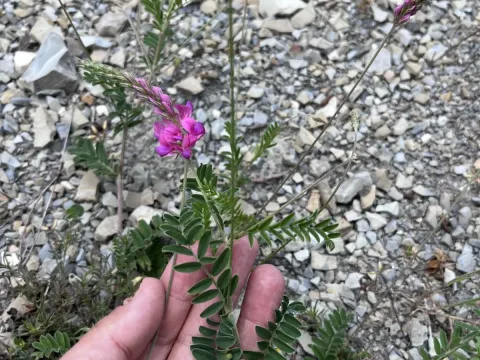
Crimean sainfoin
Hedysarum tauricum
Crimean sainfoin is a perennial legume, and its planting timing is largely dictated by local moisture availability. Early spring, when the soil reaches temperatures of 5–8 degrees Celsius, is generally considered the optimal time for establishing new fields.
What the section contains
Crimean sainfoin
In regions with milder winters, late autumn sowing is possible, allowing seeds to germinate promptly as soon as soil moisture becomes available in early spring. Seeds should be sown at a depth of 2 to 3 centimeters to ensure proper germination rates.
The seeding rate is typically set at 12–15 kg per hectare, depending on seed quality and purity. Scarification is highly recommended for seeds before sowing to break the hard seed coat and improve water absorption efficiency.
Row or narrow-row drilling is the preferred method for establishment. This allows for mechanical weed control during the first year, which is crucial because the plant grows slowly during the initial establishment phase while developing its deep taproot system.
Utilizing specialized grain-forage drills ensures uniform seed distribution across the field. Proper seedbed preparation is the foundation for success, as it minimizes competition from weeds and creates a stable environment for the seedlings to thrive.
Crimean sainfoin is a classic xerophyte, highly adapted to arid climates. It possesses an extraordinary ability to survive prolonged dry spells, making it an excellent candidate for improving pastures in water-stressed agricultural zones.
The crop thrives in well-aerated soils and demonstrates an exceptional tolerance for calcareous, stony, and limestone-rich soils where many other legumes struggle. This makes it an ideal plant for reclaiming marginal or poor-quality agricultural lands.
As a nitrogen-fixing legume, it maintains a symbiotic relationship with soil bacteria. This process enhances soil fertility by adding organic matter and nitrogen, which benefits both the plant itself and subsequent crops in a rotation cycle.
Full sun exposure is a mandatory requirement for this species. It is extremely light-demanding and will show reduced vigor or fail to establish if shaded by other taller plants or trees, necessitating the selection of open, sunny field locations.
Its cold hardiness allows it to survive in temperate climates with varying winter conditions. Even in years with little snow cover, the deep root system protects the plant, ensuring its survival and rapid regrowth when the spring temperatures rise.
The biomass yield of Crimean sainfoin is primarily influenced by environmental moisture and the maturity of the forage stand. Typically, the crop reaches its peak productivity between the second and fourth years of its growth cycle.
In favorable years with adequate rainfall during the spring season, hay yields can range from 30 to 45 decitons per hectare. The high protein content of the forage makes it a valuable feed source, particularly for livestock production systems.
Beyond green mass, the crop produces quality seeds, allowing farms to become self-sufficient in terms of planting material. Seed yields generally average between 3 to 6 decitons per hectare under good management practices.
The nutritional value of the foliage remains high even through the onset of flowering. This trait provides farmers with a wider window for harvesting, enabling better planning and logistical management during the busy agricultural season.
Regrowth after cutting is moderate, generally supporting one or two harvests per season. This reliability in yield, even in stressful conditions, makes the crop a stable asset in diversifying forage production systems.
Crimean sainfoin is relatively robust, and widespread disease outbreaks are rare. However, in conditions of excessive humidity and poor air circulation, powdery mildew may develop on the leaves, which is manageable through proper spacing.
Root rot issues can occur if the field has poor drainage or if water stagnates for extended periods. Avoiding heavy, waterlogged soils and strictly following a balanced crop rotation are the most effective preventive measures against soil-borne pathogens.
Insects like weevils can cause damage to the leaves and developing seed pods. Monitoring fields for signs of infestation is essential, especially when growing the crop for seed production, where protection of reproductive organs is critical.
Aphids might appear during extreme drought conditions on young growth. While they usually do not threaten the life of the plant, they can reduce vigor; healthy, well-maintained stands are generally capable of recovering without chemical intervention.
The natural resilience of this species to biotic stressors reduces the need for synthetic pesticides. Its evolutionary adaptation to harsh environments makes it a sustainable choice for low-input agricultural production systems.
Harvesting for hay should ideally occur at the early flowering stage. This is the period when the ratio of nutrients to fiber is optimal, ensuring high palatability and protein levels for animal feed before the stems turn too woody.
The cut crop should be wilted in windrows until the desired moisture level is reached. Careful handling during the raking and baling process is vital to minimize leaf shattering, as the leaves contain the highest concentration of essential nutrients.
Seed harvesting is carried out using direct combining as soon as the pods show signs of maturity and darkening. Timing is crucial because the pods can shatter easily, potentially leading to significant yield losses if left on the field for too long.
Post-harvest, seeds must be cleaned and dried to a moisture content suitable for storage. Proper storage in cool, dry, and ventilated conditions is necessary to maintain the seed's viability and germination energy for future planting seasons.
When used for grazing, a rotational system is necessary to prevent overgrazing. Allowing sufficient recovery time after each grazing cycle is vital for maintaining the health of the root system and ensuring the longevity of the forage stand.