
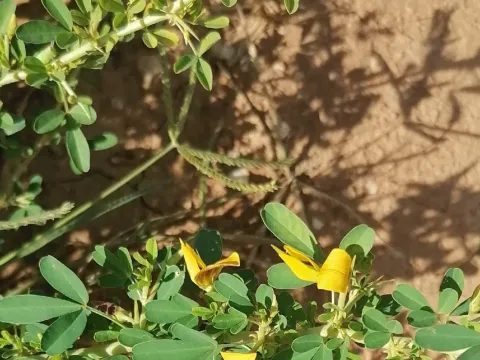
Crotalaria aculeata
Crotalaria aculeata
Sowing of Crotalaria aculeata should be performed when the soil has sufficiently warmed up, usually in late spring or early summer. Avoiding frost risk is essential for successful seedling establishment during the early growth stages.
What the section contains
Crotalaria aculeata
The seeds of this species often exhibit hard dormancy, so scarification is recommended before sowing to enhance germination rates. This simple pre-treatment significantly improves the uniformity of the plant stand.
Seeding rates vary depending on the intended use, typically ranging from 20 to 30 kg per hectare for biomass production. A planting depth of 2 to 3 cm is generally considered optimal for ensuring good soil contact.
The crop is known for its rapid early growth, which serves as a natural weed suppression mechanism. Establishing a dense canopy early in the season effectively shades out competing unwanted vegetation in the field.
In various agricultural systems, it can be integrated into intercropping designs, especially in orchards or vineyards. This helps in managing soil health while maintaining the overall productivity of the land.
Crotalaria aculeata, a member of the Fabaceae family, thrives in warm climates and requires high levels of solar radiation. It performs best in fully exposed areas without significant shading throughout the day.
The ideal soil conditions include well-drained sandy or loamy textures with a neutral to slightly acidic pH. Waterlogging must be avoided, as the root system is sensitive to prolonged saturated conditions.
This crop is recognized for its notable drought tolerance, attributed to a deep taproot system that reaches deeper soil profiles. This resilience makes it suitable for marginal lands where moisture might be limiting.
As a legume, it has the valuable ability to form symbiotic relationships with nitrogen-fixing bacteria. This process enriches the soil with atmospheric nitrogen, reducing the need for synthetic fertilizers for subsequent crops.
Maintaining balanced soil moisture during the germination phase is critical for success. Once established, the plant shows remarkable adaptability to varying environmental conditions and rainfall patterns.
The growth potential of Crotalaria aculeata is substantial, allowing it to produce high volumes of biomass in a relatively short duration. Typical yields range between 25 and 40 tons of green matter per hectare.
When used as a green manure, the yield is measured by the quality and quantity of organic matter returned to the soil. The decomposition process improves soil structure, aeration, and water-holding capacity significantly.
For seed production, yields are influenced by flowering duration and pollinator activity. Under favorable conditions, farmers can expect to harvest between 0.5 and 1.2 tons of high-quality seeds per hectare.
Optimizing yields involves timely management of soil fertility, particularly in nutrient-poor fields. Strategic application of micro-nutrients during the early growth phase can help reach maximum biomass potential.
Incorporating this crop into a long-term rotation strategy helps maintain overall soil vitality. By providing a natural boost to nutrient levels, it proves to be a cost-effective choice for modern agricultural practices.
Common agricultural pests affecting legumes, such as weevils or various pod-boring insects, can pose a risk to the crop. These pests may damage foliage, roots, or developing seeds if left unmonitored.
Fungal diseases, including powdery mildew and anthracnose, are the primary health concerns, especially in high-humidity or poorly ventilated conditions. Prevention through proper spacing and field sanitation is vital.
Integrated pest management strategies are recommended to keep damage below economic thresholds. Regular scouting of the fields allows for the early detection of localized infestations before they spread.
Crop rotation serves as a primary preventative measure against soil-borne pathogens. Avoiding the planting of Crotalaria immediately after other susceptible legume species helps break the pest life cycle.
Chemical intervention should be considered only as a last resort, using products that are safe for beneficial insects. Adhering to strict application guidelines ensures both crop protection and environmental safety.
Harvesting for green manure purposes should occur at the peak of the flowering stage. At this point, the plant has accumulated its maximum nutrient load, and the stems are still tender enough for rapid decomposition.
Mechanical incorporation into the topsoil layer is performed using disk harrows or specialized shredders. Ensuring the green matter is well-mixed with soil facilitates rapid breakdown and mineralization of nutrients.
For seed collection, harvesting is performed when the pods turn dark and the seeds become hard and fully mature. Using a combine harvester requires precise calibration to minimize seed damage during the threshing process.
Post-harvest handling involves thorough cleaning of seeds and drying to safe moisture levels, typically below 14%. Proper storage in cool, dry conditions prevents quality degradation and mold growth.
Cleanliness of all harvesting equipment is mandatory to prevent cross-contamination. Removing soil and debris from machinery prevents the spread of pathogens or volunteer weeds to other parts of the farm.