
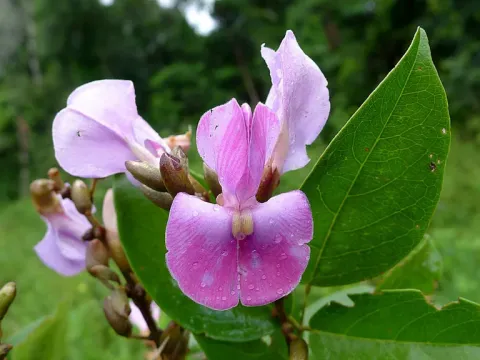
Cratylia
Cratylia
Sowing of Cratylia (specifically Cratylia argentea) is typically carried out at the beginning of the rainy season when soil moisture is sufficient for seed germination. In regions with distinct dry seasons, it is crucial to ensure young seedlings have adequate moisture during their first two months of development.
What the section contains

Cratylia
It is recommended to use prepared fields free of weeds, as the crop exhibits a slow initial growth rate. Row spacing usually varies from 50 to 100 cm, depending on the intensity of the plantation management.
While seed pre-treatment is not strictly necessary, scarification of the seed coat can significantly enhance germination vigor. Cratylia is well-adapted to direct seeding in prepared furrows without the need for deep plowing.
Seeding rates are calculated based on the target plant density required for maximizing biomass yield. In industrial operations, both direct seeding and transplanting nursery-grown seedlings are common practices.
The crop possesses a high capacity for root system regeneration after mechanical disturbances during sowing, allowing it to adapt quickly to the field conditions.
Cratylia belongs to the Fabaceae family and is a perennial semi-shrub native to South America, particularly Brazil and Bolivia. It demonstrates exceptional tolerance to prolonged drought periods, making it an invaluable resource in arid tropical regions.
The plant prefers well-drained acidic soils with low phosphorus levels, where other traditional forage crops often fail. Through symbiosis with nitrogen-fixing bacteria, Cratylia efficiently enriches the soil with nitrogen.
Optimal temperature ranges for the development of the crop are between 20 and 30 degrees Celsius. While it can withstand temporary temperature drops, it is sensitive to severe frosts which may damage the aerial parts.
Full sun exposure is required for vigorous growth, as productivity drops significantly in shaded conditions. It does not tolerate prolonged waterlogging or poor drainage in the root zone.
Management includes regular weeding during the first year of vegetation. As the plant matures, it develops a deep and robust root system capable of outcompeting weeds on its own.
The primary use of Cratylia is the production of high-quality protein forage for cattle and small ruminants. Its leaves contain significant levels of crude protein, making it an excellent supplement to low-quality fiber-rich roughages.
Biomass yield depends heavily on planting density and precipitation levels during the growing season. On average, with proper management, it is possible to achieve several cuts per year, ensuring a stable supply of nutrients for livestock rations.
Cratylia can be utilized as fresh forage, silage, or hay. Research confirms that it retains its nutritional value even after drying, which is critical during the dry season.
The plant's value lies in its ability to remain green and nutritious when most grasses dry out. This provides livestock producers with a "green bridge" during periods of feed scarcity.
The economic sustainability of the crop is proven by its longevity: a single plantation can remain productive for 10 to 15 years with minimal maintenance costs.
Cratylia is considered relatively resistant to most common agricultural diseases. However, in conditions of high humidity, it can be susceptible to fungal leaf spot diseases.
Among pests, leaf-eating insects pose the greatest threat, along with root-knot nematodes during the early development stages. Due to the specific chemical composition of its leaves, the plant is rarely subject to massive pest outbreaks.
To minimize risks, it is recommended to maintain optimal planting density, which ensures good air circulation between plants. This prevents the development of mold and fungal infections in the lower parts of the canopy.
In cases of pest infestation in commercial plantations, biological control agents are the preferred method of protection. Chemical pesticides are rarely used due to the risk of residue accumulation in the forage.
Monitoring plantation health during active growth allows for early threat detection. Regular pruning also encourages plant rejuvenation and the removal of damaged shoots.
Harvesting Cratylia is performed by cutting the aerial parts of the plant. The optimal cutting height is 30 to 50 cm above the ground, which stimulates rapid regrowth of new side shoots.
In tropical conditions, harvesting is practiced at intervals of 60 to 90 days depending on the growth rate. This schedule allows for a balance between biomass volume and nutritional quality.
For hay production, cutting should be performed in the morning after the dew has evaporated. Quick sun-drying ensures maximum protein retention and prevents leaf discoloration.
When producing silage, maintaining the correct moisture content is essential. Cratylia works well when mixed with other crops like corn in silos, improving the overall amino acid profile of the feed.
Seed collection is performed manually or mechanically after pods reach full maturity. Seeds show high germination rates when stored in cool, dry conditions, allowing for the use of farm-saved seeds.