
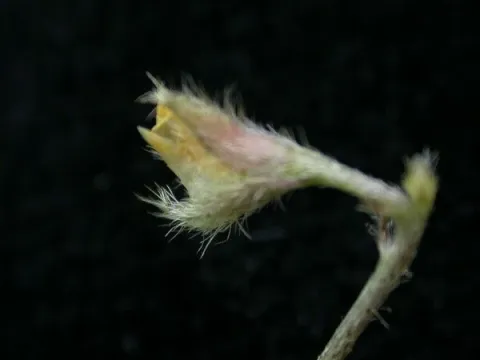
Crotalaria acicularis
Crotalaria acicularis
Crotalaria acicularis is typically sown when temperatures stabilize, ideally when soil temperatures reach 15–18°C. In tropical regions, planting is best timed with the onset of the rainy season.
What the section contains
Crotalaria acicularis
The recommended sowing method is row planting, maintaining 30 to 45 cm between rows to ensure proper development of the plant and adequate access to sunlight.
Seeding rates depend on seed quality and objectives, usually ranging from 10 to 15 kg per hectare to achieve optimal density for green manure production.
Given the hard coat of the seeds, pre-sowing scarification is highly recommended to improve germination rates and ensure a uniform crop stand across the field.
Seeds should be planted at a depth of 2–3 cm; this ensures sufficient moisture for germination while allowing the seedlings to emerge efficiently from the soil.
As a member of the Fabaceae family, this crop is a tropical legume that thrives in frost-free environments and requires a long growing season to reach maturity.
Crotalaria acicularis has a high demand for sunlight; it performs poorly when shaded, so it is best cultivated in open fields as a monocrop for maximum yield.
This species is well-adapted to various soil types, including nutrient-poor or acidic soils, provided that the ground is well-drained and not prone to waterlogging.
The plant exhibits significant drought tolerance once established, though it requires consistent moisture during the early seedling stage to develop a strong root system.
Optimal soil aeration is crucial for the nitrogen-fixing bacteria associated with its roots, making loose, non-compacted soil textures ideal for cultivation.
The primary economic value of Crotalaria acicularis lies in its massive biomass production, which is utilized for soil remediation and organic matter enrichment.
Under favorable management conditions, green manure yields range from 15 to 25 tons per hectare, significantly improving the carbon content of the soil profile.
Through its symbiotic relationship with rhizobia, the crop efficiently fixes atmospheric nitrogen, often contributing 100–150 kg of nitrogen per hectare to the soil.
Seed production yields average 0.5–1.2 tons per hectare, which provides sufficient material for the farmer's internal needs for future planting seasons.
The efficiency of the crop is best demonstrated by its rapid vegetative growth, which helps suppress weed competition and protects the soil from erosion.
While generally hardy, the crop can be susceptible to fungal diseases such as leaf spots and anthracnose, especially in areas with high humidity and poor airflow.
Root-knot nematodes and nodule weevils are the most common pests that can hinder root development and interfere with the plant’s nitrogen-fixing capacity.
Certain lepidopteran larvae may feed on the foliage, necessitating regular field monitoring to prevent large-scale defoliation during the peak growth season.
Effective management includes integrated pest control strategies, proper crop rotation, and the elimination of host weeds around the perimeter of the field.
Ensuring healthy plant vigor through proper soil preparation and balanced nutrition is the best defense against major biotic stressors for this legume species.
Harvesting for green manure is typically performed at the onset of flowering, which is the stage when the plant contains the highest level of nutrients.
The biomass is usually shredded and incorporated into the top layer of the soil using discs or specialized equipment to accelerate decomposition and nutrient cycling.
For seed harvesting, the crop should be left until the pods are fully dried and brittle, ensuring that the moisture content is low enough for stable storage.
Mechanical harvesting requires careful adjustment of combine settings to avoid seed damage, as the grains can be sensitive to excessive mechanical impact.
Post-harvest residues can be effectively used as mulch, providing long-term protection for the soil and contributing to the sustained fertility of the agricultural plot.