
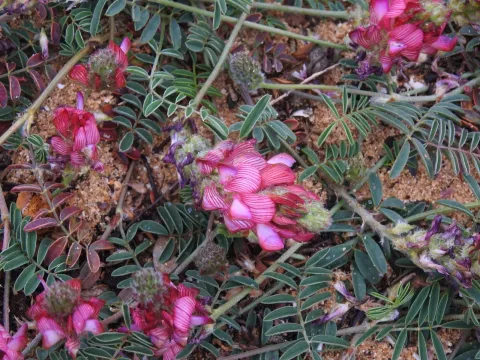
Onobrychis humilis
Onobrychis humilis
Onobrychis humilis, commonly known as a type of low-growing sainfoin, is a perennial legume highly valued for its adaptability in arid and semi-arid environments. Belonging to the Fabaceae family, it is recognized for its extensive root system.
What the section contains
Onobrychis humilis
Sowing should take place in early spring when the soil temperature consistently reaches 5–8 degrees Celsius. Proper seed-to-soil contact is essential for uniform germination and early establishment.
The seeds of this species are protected by a tough pod or shell, which necessitates scarification before planting. This process helps to break dormancy and ensures a higher field emergence rate.
The recommended seeding rate is typically between 60 to 80 kilograms per hectare, depending on local soil quality. Precision drilling is preferred over broadcasting to ensure consistent planting depth of 2–3 centimeters.
As a nitrogen-fixing crop, Onobrychis humilis provides significant soil fertility benefits. It creates a symbiotic relationship with beneficial bacteria that convert atmospheric nitrogen into a plant-available form.
This crop thrives in open, sunny locations and is highly sensitive to shading from weeds or taller crops. It performs best on calcareous soils and is particularly well-suited for alkaline conditions.
Drought tolerance is one of the key agronomic features of Onobrychis humilis. It is able to survive prolonged dry spells, making it an excellent choice for areas with limited rainfall.
The plant requires well-drained soils and does not tolerate waterlogging. High moisture in the root zone can lead to crown rot and reduced plant longevity, which are significant constraints in certain environments.
A soil pH between 7.0 and 8.0 is ideal. Because it is a calciphile, it often benefits from lime application on acidic or neutral-acidic soils to reach its full productive potential.
Temperature tolerance is broad, though it prefers moderate climates. It is hardy enough to handle early spring frosts, which often allows for an early start to the growing season.
The forage yield of Onobrychis humilis is highly valued for its high protein content and digestibility. While growth may be slower compared to alfalfa, the forage quality remains consistently high.
Depending on the region, growers can typically expect one to two harvests per year. The nutritional profile remains stable even if harvesting is slightly delayed compared to other forage legumes.
Seed yield varies depending on insect pollination success and moisture levels. A healthy crop can produce between 4 to 8 decitonnes of seeds per hectare under good management practices.
Livestock producers favor this crop because it does not cause bloat in ruminants. This characteristic significantly reduces veterinary costs and livestock management risks during grazing.
Integrating this legume into crop rotation improves the yield of subsequent cereals by reducing the need for synthetic nitrogen fertilizers and improving soil structure over time.
Powdery mildew is a common fungal disease that can affect the foliage during humid periods. Ensuring adequate plant spacing and air circulation within the field helps to mitigate this risk.
Root rots remain the most serious threat, usually associated with poorly drained soils or excessive rain. Rotation strategies are the primary method for managing long-term soil health and minimizing pathogen buildup.
Insect pests such as seed weevils can significantly damage reproductive organs, leading to lower seed production. Monitoring fields during the budding stage is crucial for timely pest control.
Aphids can cause stress during peak summer heat, impacting the plant's overall vigor. In cases of high infestation, targeted insecticide applications may be necessary to protect the yield.
Integrated Pest Management (IPM) practices, such as maintaining healthy surrounding field margins, can help provide a habitat for natural predators that control these pest populations effectively.
Harvesting for forage is recommended at the start of the flowering phase. This timing provides the optimal balance between biomass accumulation and nutrient quality, particularly protein content.
Mechanical harvesting with conditioning mowers helps to speed up the drying process. Rapid drying is essential to retain the leaf content and nutritional value of the harvested hay.
For seed harvest, the pods should be fully matured and dried on the plant. The timing must be precise to prevent seed shatter, which is a common problem in legume seed production.
Post-harvest processing involves thorough cleaning and drying of the seeds. Maintaining moisture levels below 14 percent is necessary to ensure long-term viability and prevent mold during storage.
Storing the seeds in cool, dry, and rodent-proof facilities is mandatory. Proper labeling and batch tracking are recommended for growers looking to sell high-quality certified seeds.