
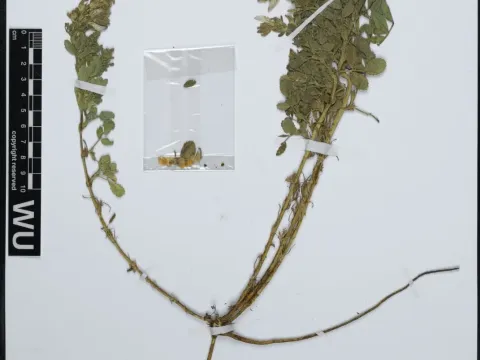
Ononis cossoniana
Ononis cossoniana
Ononis cossoniana is a perennial herbaceous plant belonging to the Fabaceae family. The crop is characterized by high adaptability to the environmental conditions typical of North African regions, yet, when introduced into commercial cultivation, it requires specific sowing timelines for optimal root system development.
What the section contains
Ononis cossoniana
Seeding is recommended during the early spring period, once the soil has warmed to a temperature of 8–10 degrees Celsius. This ensures uniform germination and allows the plants to establish strength before the onset of critically high summer temperatures.
In arid regions, winter sowing is a viable option, allowing the crop to utilize moisture from melting snow. The seed planting depth is typically between 1.5 and 3 centimeters, depending on the soil type and surface density.
Adhering to the recommended seeding rate, based on the purity and germination capacity of the seed material, is a crucial factor. For a dense stand, row seeding with row spacing of 30–45 centimeters is advisable.
The seeds of Ononis exhibit high germination energy, which, provided there is sufficient moisture in the topsoil, guarantees even emergence within 12–15 days after planting.
This crop prefers well-drained, light-textured soils. Ononis cossoniana displays significant tolerance to saline soils, making it a promising candidate for soil reclamation and stabilization in challenging environmental conditions.
The plant is light-loving and drought-resistant. During the active growing season, it can endure long periods without rainfall due to its deep taproot system, which is characteristic of this particular species.
Regarding soil pH, Ononis has moderate requirements, performing best in neutral or slightly alkaline soils. Excessive soil moisture and waterlogging are detrimental to the root system, so site selection should avoid low-lying areas prone to flooding.
The application of mineral fertilizers, particularly phosphorus and potassium, promotes better root development and increases the accumulation of bioactive compounds. Nitrogen fertilizers are used sparingly, as this legume is capable of atmospheric nitrogen fixation.
The optimal temperature range for the crop's development is between 20 and 30 degrees Celsius. The plant demonstrates high resistance to sharp fluctuations in day and night temperatures within its natural geographic range.
The economic utilization of Ononis cossoniana primarily spans the pharmaceutical industry and fodder production. The plant's roots are of greatest value, as they contain a complex of essential oils, flavonoids, and tannins.
When used as a forage crop, green mass yield depends on the frequency of mowing and the overall level of agrotechnical management. The plant regenerates well after mowing, which allows for multiple harvests throughout the season.
Root mass accumulation occurs gradually; therefore, it is advisable to harvest the raw material during the second or third year of the plant's life, when the concentration of bioactive compounds reaches its peak.
The biological productivity of the species is higher under conditions of ample sunlight and moderate temperatures. In intensive farming systems, root yields can reach several centners per hectare in dry weight.
The economic viability of cultivation is closely tied to the potential for mechanized root harvesting, which necessitates preliminary deep plowing and thorough preparation of the land plot.
Ononis cossoniana possesses high phytosanitary resistance, typical of species adapted to extreme environmental conditions. Nevertheless, in conditions of high humidity, it can be susceptible to fungal diseases such as powdery mildew.
Among pests, various species of weevils and bean aphids pose the greatest threat, as they can damage young shoots and leaves. Regular crop monitoring allows for the timely application of protective measures.
To prevent the spread of root diseases, it is necessary to practice crop rotation and avoid monocropping on the same field for more than five years to prevent the accumulation of specific pathogens in the soil.
Weed competition is a major challenge during the early seedling stage. Utilizing inter-row cultivation and selective herbicides effectively helps maintain clean fields during the first months of growth.
Prophylaxis against phytosanitary issues includes the use of treated seed material and maintaining optimal plant density, which prevents excessive humidity in the lower canopy of the crop.
The green mass is harvested during the peak flowering period, when the concentration of beneficial substances in the above-ground organs is at its maximum. Mowing is performed at a height of 5–7 centimeters from the soil surface to ensure subsequent regeneration.
Root harvesting takes place in the autumn, when the aerial parts of the plant begin to die back. During this time, the concentration of nutrients and bioactive compounds in the roots is at its highest, which is critical for medicinal applications.
The extraction of roots from the soil requires the use of specialized plows or potato diggers. After extraction, the roots are cleaned of soil, washed with running water, and dried in well-ventilated rooms.
Drying of the raw material should be conducted at temperatures not exceeding 40–50 degrees Celsius to preserve the structure of the active compounds. Properly dried roots have a characteristic yellowish-brown color and a specific aroma.
Following primary processing and packaging, the finished product should be stored in dry, dark, and cool areas, protected from moisture and direct sunlight to prevent degradation.