
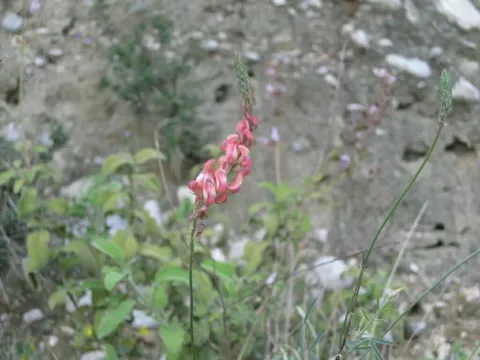
Onobrychis gracilis
Onobrychis gracilis
Onobrychis gracilis is a perennial legume that requires precise timing for sowing to ensure successful establishment. Early spring, once the soil reaches physical maturity and warms up to 5-8 degrees Celsius, is considered the optimal window for planting.
What the section contains
Onobrychis gracilis
Since the crop exhibits slow early growth, sowing as early as possible is vital to capitalize on soil moisture. This allows the root system to develop adequately before the onset of the summer heat, which is characteristic of the arid regions where this plant thrives.
The standard method of cultivation involves row sowing with spacing between 15 and 30 centimeters. The seeding depth must be adjusted according to soil texture: 3-4 cm for lighter sandy soils and no more than 2 cm for heavier clay-based soils to ensure successful germination.
Seeding rates typically range from 80 to 120 kilograms per hectare, depending on local moisture availability and the intended final use, whether it be for hay production or seed multiplication.
Cover cropping is a common practice, where Onobrychis gracilis is undersown with spring cereals. In such cases, the seeding rate of the cover crop is reduced by 20-30% to allow the legume seedlings sufficient access to light and nutrients during the first year.
This species is highly drought-tolerant and performs best on calcareous soils rich in calcium. It is largely indifferent to low fertility but shows poor growth in acidic, waterlogged, or cold, heavy soils with high water tables.
The plant possesses strong cold resistance, making it an excellent candidate for the climatic conditions of steppe and forest-steppe zones. Its deep-reaching root system allows it to access subsoil moisture, ensuring stable production even during prolonged dry spells.
High levels of light exposure are essential for the plant's development. Due to its slow initial growth rate, the crop is sensitive to competition from weeds, and therefore, it requires a clean field at the time of sowing to establish a dense, productive stand.
As a legume, it acts as a soil improver, fixing atmospheric nitrogen through symbiosis with root-nodule bacteria. This significantly boosts the fertility of the soil for subsequent crops in a rotation, making it a valuable asset for sustainable agriculture.
Adequate application of phosphorus and potassium fertilizers is necessary to support root architecture. While the plant can fix nitrogen, phosphorus is the critical limiting factor for both the development of the root system and the production of seeds.
The yield of Onobrychis gracilis is heavily dependent on the frequency of mowing and the availability of water during the growing season. On average, the crop provides two substantial harvests, with a third one possible in irrigated or high-moisture conditions.
Dry matter yields range from 5 to 8 tonnes per hectare. The resulting hay is high in protein and is recognized for its health benefits for livestock, as it does not cause bloat, unlike many other common pasture legumes.
Seed yield varies significantly based on pollinator activity, particularly honeybees. Under ideal conditions, producers can expect between 3 to 6 centners of seed per hectare, providing a viable economic secondary income for farmers.
Productivity tends to peak between the second and third years of establishment. Typically, the stand is kept for 3 to 5 years, after which the density declines naturally and the field is rotated to other crops to maintain high productivity levels.
To maximize yields, weed control is essential during the establishment year. Once fully established, the dense canopy of the crop becomes quite competitive, naturally suppressing many annual weeds without the need for intensive chemical intervention.
Onobrychis gracilis is relatively resistant to many diseases, but high humidity can trigger issues like powdery mildew, various leaf spots, and fusarium wilt. Proper air circulation and stand management are key to preventing these outbreaks.
Insect pests, such as weevils and seed-feeding beetles, represent the most significant threat to both foliage and reproductive organs. Infestations can lead to major seed losses if not addressed during the critical flowering stages.
Prevention relies on good agricultural practices, including crop rotation and the use of healthy, high-quality seed. Returning the crop to the same land within a 5-6 year interval helps avoid the accumulation of soil-borne pathogens.
For pest control on seed-production fields, insecticides may be required during the budding phase. These applications must be carefully timed to avoid harming honeybees and other essential pollinators that are necessary for seed set.
Maintaining optimal plant density helps reduce humidity levels within the canopy, lowering the risk of fungal infections. Regular monitoring is encouraged, especially during wet spring months, to ensure early detection of any emerging threats.
The optimal harvest window for hay or green fodder is during the period of full bloom. At this stage, the plant reaches its peak nutritional value, offering the best balance of protein, vitamins, and minerals for livestock feeding.
Delayed harvesting leads to the hardening of stems, which decreases overall protein content and palatability. Harvesting too early, however, can stress the plant and reduce the biomass potential for subsequent regrowths.
For seed production, harvesting should occur when the majority of pods turn brown. Excessive exposure after maturity leads to seed shattering, so quick and timely harvesting is necessary to prevent significant yield losses in the field.
The swathing method, where the crop is mowed and left to dry in windrows before threshing, is highly recommended. This practice ensures uniform drying and reduces the moisture content of the seeds, protecting their viability.
After threshing, seeds should be cleaned and dried to a standard moisture content of approximately 13-14%. Proper storage in cool, dry conditions allows the seeds to maintain high germination rates for several seasons.