
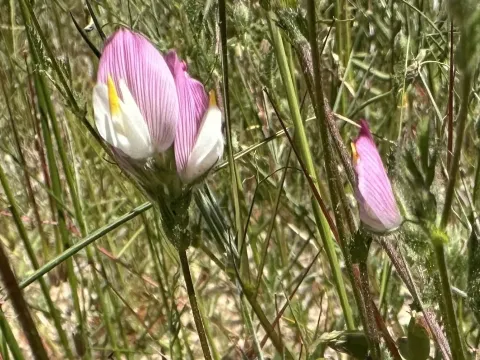
Ononis broteriana
Ononis broteriana
Ononis broteriana is a perennial herbaceous plant belonging to the Fabaceae family. Known in some regions as a type of restharrow, it exhibits traits characteristic of Mediterranean flora, showing significant adaptation to arid environments.
What the section contains
Ononis broteriana
The native distribution of this species is centered in the Iberian Peninsula, specifically in Portugal and Spain. It thrives in open, sunny habitats and is typically found in well-drained soils, often thriving in rocky or sandy substrates where other crops struggle.
Regarding soil requirements, this species favors neutral to slightly acidic pH levels. Its deep root system is a physiological adaptation that allows it to access deeper water tables, making it highly drought-tolerant once fully established in the field.
The plant demonstrates a strong preference for high light intensity, which is essential for maximizing its vegetative growth. Shade significantly limits its development and may reduce the concentration of phytochemicals in its tissues.
Given its botanical classification, Ononis broteriana is capable of forming symbiotic relationships with nitrogen-fixing bacteria. This feature contributes to its ability to persist in nutrient-poor soils, making it an interesting candidate for sustainable soil improvement projects.
The sowing process for Ononis broteriana should ideally be timed for early spring. This allows the seeds to benefit from early seasonal rains while avoiding the extreme heat of the mid-summer months during the delicate germination stage.
Seed preparation is a crucial agronomic step due to the hard seed coat inherent in many species of the Fabaceae family. Scarification or soaking the seeds for 24 hours prior to sowing can significantly improve the rate and uniformity of germination.
The optimal sowing depth is shallow, ranging from 1 to 2 centimeters. Because the seeds are relatively small, planting them too deep often results in failure to emerge due to the exhaustion of energy reserves before reaching the surface.
For field cultivation, a row spacing of 30 to 50 centimeters is recommended. This spacing provides enough room for weed control operations and facilitates air circulation, which is vital for preventing fungal outbreaks in dense plantings.
After seeding, it is highly recommended to roll the soil surface. This action ensures adequate seed-to-soil contact, which is the most critical factor for successful establishment in dry and loose soil types common in the plant's native habitat.
Root rot is the most common threat to Ononis broteriana when grown in areas with poor drainage or excessive rainfall. The accumulation of water around the root zone encourages pathogens that lead to plant decay.
Insect pests, specifically weevils, can cause substantial damage during the vegetative stage. They primarily target the young leaves and shoots, which can lead to stunted growth and reduced biomass yield if not managed through proper monitoring.
Powdery mildew may occur during periods of high humidity combined with fluctuating temperatures. Preventive measures include ensuring good spacing between rows and, if necessary, applying appropriate fungicides to protect the foliage.
Weed management remains the most significant challenge in the first year of production. Because the initial growth rate of Ononis broteriana is relatively slow, aggressive weed control during this period is essential to prevent the crop from being outcompeted.
Regular monitoring for aphid infestations is also advisable. While not always fatal, heavy aphid populations can weaken the plant and serve as vectors for various viral diseases, which can impact the long-term productivity of the stand.