
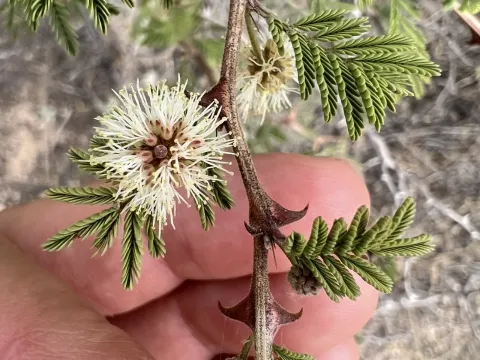
Catclaw mimosa
Mimosa biuncifera
Catclaw mimosa (Mimosa biuncifera) is a perennial deciduous shrub belonging to the Fabaceae family, native to the arid landscapes of North America. It is widely recognized for its high drought tolerance and structural adaptation to desert-like environments.
What the section contains
Catclaw mimosa
This species thrives in well-drained, sandy, or rocky soils and requires full sun exposure to maintain optimal physiological functions. It is highly valued for its ability to stabilize soil and prevent erosion in fragile ecosystems.
As a nitrogen-fixing legume, the plant significantly enhances soil quality by enriching it with essential nutrients through biological fixation, which benefits the surrounding vegetation in natural habitats.
Climatic requirements focus on warm growing seasons with moderate to low precipitation. The plant is sensitive to waterlogging, so adequate soil drainage is the most critical factor for its successful establishment and longevity.
The morphology includes dense clusters of small, fragrant flowers and distinct curved prickles, which offer protection against herbivory, contributing to its survival in competitive natural settings.
The primary health threats to Mimosa biuncifera include soil-borne pathogens that favor damp conditions, leading to root rot and collar decay in poorly drained agricultural environments.
Insects, particularly seed-feeding beetles, represent a significant concern as they can destroy a substantial portion of the annual seed crop, impacting the plant's natural regeneration cycle.
Fungal infections, such as powdery mildew, may affect foliage during periods of unusually high humidity, potentially reducing the photosynthetic capacity of the shrub during the peak growing season.
Maintaining proper spacing and ensuring excellent air circulation around the plants are recommended strategies to mitigate the spread of leaf-damaging diseases in cultivated populations.
Biological monitoring is essential to detect pest infestations early, as chemical interventions are often limited by the plant's use in pastoral or ecologically sensitive areas.