
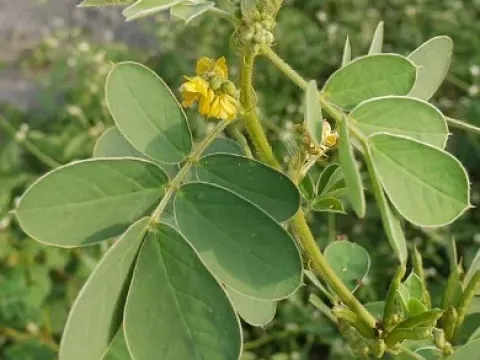
Cassia uniflora
Cassia uniflora
Cassia uniflora, also known under the synonym Senna uniflora, belongs to the Fabaceae family. For successful germination, the seeds require warmed soil, which is why sowing is carried out strictly after stable warm weather is established.
What the section contains
Cassia uniflora
In regions with tropical and subtropical climates, the optimal sowing period is considered to be the beginning of the rainy season, which provides natural moisture for seed germination.
The seeding depth ranges from 2 to 3 centimeters, depending on the soil texture. It is crucial to maintain spatial isolation, as the crop can exhibit invasive properties under favorable conditions.
Before sowing, scarification of the seeds is recommended to increase the germination rate, as the hard coat of these legumes often hinders rapid sprouting.
The planting density is chosen based on the intended use: for green biomass production, a higher density is required compared to seed multiplication efforts.
This plant is a sun-loving crop and is extremely sensitive to shading; therefore, full development requires open areas with maximum solar exposure.
The crop is relatively undemanding regarding soil conditions, but it demonstrates the best productivity on well-drained sandy loams and light loam soils with a neutral or slightly acidic pH.
Cassia uniflora possesses marked drought resistance due to its well-developed root system, allowing it to survive in conditions of limited moisture after the establishment phase.
The temperature optimum for vegetation is in the range of +22 to +30 degrees Celsius; the plant is killed by frost, which restricts its cultivation range to warmer climate zones.
Particular attention should be paid to soil aeration, as stagnant moisture and waterlogging in the root zone lead to the development of rot and stunted growth.
The economic use of the crop is focused primarily on the production of green biomass, which has a certain nutritional value, although its inclusion in animal diets requires strict control.
The biomass yield depends directly on soil fertility and rainfall patterns; under intensive cultivation techniques, yields can reach significant values in tropical environments.
Seed material is harvested as the pods turn brown, avoiding over-ripening, as shattering of the pods leads to significant harvest losses in the field.
When used as a green manure, it is important to incorporate the biomass into the soil before the stems become coarse to ensure rapid decomposition and nitrogen enrichment.
Yield potential is also limited by the crop's high competitiveness against weeds, which necessitates thorough field management during the early growth stages.
Major phytopathological threats include fungal diseases caused by excessive humidity, such as anthracnose and various types of root rot that affect the vascular system.
Pests typical of legumes, including weevils and various leaf beetles, can cause significant damage to the vegetative mass, reducing the plant's overall photosynthetic activity.
Pest management requires an integrated approach: using biological control methods and timely monitoring of insect population densities.
Nematodes pose a serious threat to the root system, especially when the crop is grown continuously on the same plot, making proper crop rotation essential.
The application of chemical pesticides must be strictly regulated, as excessive use can disrupt the delicate balance of entomophages that naturally suppress pest outbreaks.
Harvesting for green biomass is conducted during the peak flowering period, when the concentration of nutrients in the leaves and stems reaches its maximum before fruit set.
Mechanical harvesting uses flail mowers, which allow for the uniform distribution of plant residues if the cassia is intended for soil amendment.
For seed harvesting, direct combining or windrowing followed by threshing after the pods have matured in the field is utilized.
Collected seed batches require immediate cleaning of impurities and drying to standard moisture levels to prevent spoilage during storage in warehouses.
Timeliness of harvest operations is of critical importance, as letting the crop stand too long leads to a loss of seed quality and a sharp decrease in germination for the following season.