
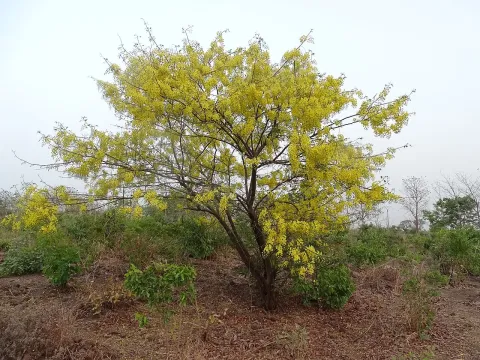
Cassia sieberiana
Cassia sieberiana
Cassia sieberiana is a perennial leguminous tree (Fabaceae) that propagates primarily through seeds in its natural habitat. The seeds have a hard seed coat, necessitating pre-sowing scarification to break dormancy and ensure uniform germination.
What the section contains
Cassia sieberiana
For agricultural or reforestation purposes, seeds are sown in nursery beds just before the onset of the rainy season. The optimal sowing depth is 2–3 centimeters in well-draining, nutrient-rich potting soil.
Germination typically occurs within 2 to 4 weeks, provided that moisture levels are consistently maintained. Seedlings are ready for transplanting to their permanent location once they reach a height of 30–40 centimeters.
During the first two years of growth, young trees require supplemental watering during dry spells and active weed management in the surrounding soil area to prevent nutrient competition.
Planting density varies based on project goals; for live fences or windbreaks, spacing of 2–3 meters between individual trees is generally recommended to allow for crown development.
As a native species of African savannas and open woodlands, Cassia sieberiana requires a tropical climate characterized by distinct wet and dry seasons. It is highly adapted to high temperatures and intense solar radiation.
The species is relatively undemanding regarding soil type, thriving best in sandy or loamy soils that provide excellent drainage. It is notable for its exceptional drought tolerance, making it suitable for arid regions.
Waterlogging is detrimental to the root system of this species, often leading to root rot and stunted growth. Consequently, sites with heavy clay or high water tables should be avoided during site selection.
The tree prefers neutral to slightly acidic soil pH. As a member of the legume family, it contributes to soil health by fixing atmospheric nitrogen, thereby enriching the nutrient profile of the surrounding environment.
Full sun exposure is essential for the healthy development of Cassia sieberiana. Significant shading inhibits growth and reduces the intensity and frequency of its vibrant yellow flowering cycles.
Cassia sieberiana possesses strong natural resistance to many common pests due to specific phytochemicals in its bark and leaves. Nevertheless, young nursery seedlings can be susceptible to damage from various chewing insects.
Fungal leaf spot diseases may appear during periods of high humidity combined with poor air circulation. Proper pruning of the lower branches can significantly mitigate these risks by improving airflow within the canopy.
While the tree is rarely affected by major agricultural epidemics, continuous monitoring of the trunk is advised to check for wood-boring insects. Any observed infestations should be managed with localized biological control methods.
During the flowering season, aphids may occasionally feed on young shoots and nectar, causing minor stress to the plant. If infestations are heavy, targeted insecticidal soap treatments can be utilized.
Adhering to strict phytosanitary practices, such as disinfecting pruning tools between uses and removing dead biomass from the area, is the most effective way to prevent the spread of opportunistic pathogens.
Agricultural interest in Cassia sieberiana focuses mainly on the harvest of medicinal materials, specifically the root bark, stem bark, and seeds. Harvesting should be performed using sustainable extraction methods to ensure the tree's long-term survival.
The harvesting of plant materials is most effective during the dry season, when the concentration of medicinal alkaloids and secondary metabolites is at its peak. After collection, the bark must be air-dried in a shaded, well-ventilated area.
Seeds are collected once the long, cylindrical pods have reached maturity and turned dark brown. Traditional threshing methods are used to extract the seeds, which are then cleaned and graded based on size and viability.
The wood of Cassia sieberiana is prized for its high density and natural resistance to termites. Timber is typically harvested during planned thinning or land management cycles rather than dedicated logging.
It is critical to follow established quotas for bark and seed collection to avoid over-harvesting, as excessive exploitation can jeopardize the natural regenerative capacity of local populations.