
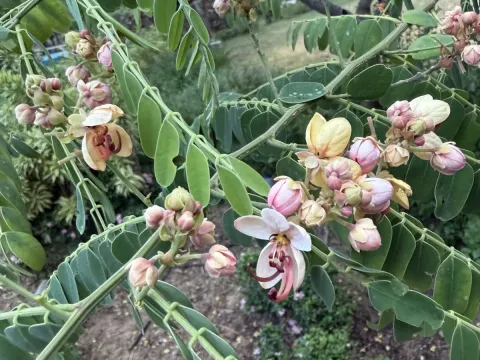
Cassia roxburghii
Cassia roxburghii
Cassia roxburghii, commonly known as the Red Cassia, belongs to the Fabaceae (legume) family. It is a medium-sized deciduous tree prized for its stunning pink or red flower clusters.
What the section contains
Cassia roxburghii
Native to tropical regions of South Asia, specifically India and Sri Lanka, this species thrives in climates with a defined wet and dry season. It is not frost-tolerant and requires warm temperatures year-round.
The cultivation of Cassia roxburghii necessitates full sun exposure to ensure robust growth and prolific flowering. Planting in shaded areas often results in weak branches and minimal blooms.
Soil requirements are relatively specific: the tree demands well-drained soil to prevent root asphyxiation. It can adapt to various soil types, provided that waterlogging is strictly avoided.
During the early establishment phase, consistent irrigation is crucial. Once matured, the tree exhibits moderate drought tolerance, making it a sustainable choice for xeriscaping in tropical climates.
The primary use of Cassia roxburghii is horticultural. It is widely utilized as an ornamental tree in urban landscaping, public parks, and botanical gardens due to its high aesthetic appeal.
Its timber is recognized for its durability and structural strength, occasionally being used for small-scale carpentry and the manufacturing of traditional rustic furniture.
In various parts of its native range, the tree serves a minor role in traditional botanical medicine, where specific extracts are used based on local knowledge.
The tree acts as an effective nectar source for various pollinators, particularly bees and butterflies, which enhances the local ecosystem's productivity.
As a legume, the tree contributes to soil health through symbiotic nitrogen fixation, which benefits the surrounding soil structure and nearby companion plants.
The tree is susceptible to fungal pathogens when grown in overly humid or poorly ventilated conditions, which may lead to leaf spots or stem infections.
Common insect pests include caterpillars and aphids that feed on tender foliage. If left unchecked, these infestations can significantly reduce the tree's ornamental value.
Root rot is the most common physiological threat, often caused by poor drainage or excessive irrigation during the dormant phase.
Regular maintenance, including the pruning of deadwood and the removal of infested leaves, is the most effective strategy to manage pest populations.
Monitoring the bark for bore-holes is essential, as certain wood-boring beetles can cause irreparable structural damage to the trunk of mature trees.