
Caven acacia
Vachellia caven
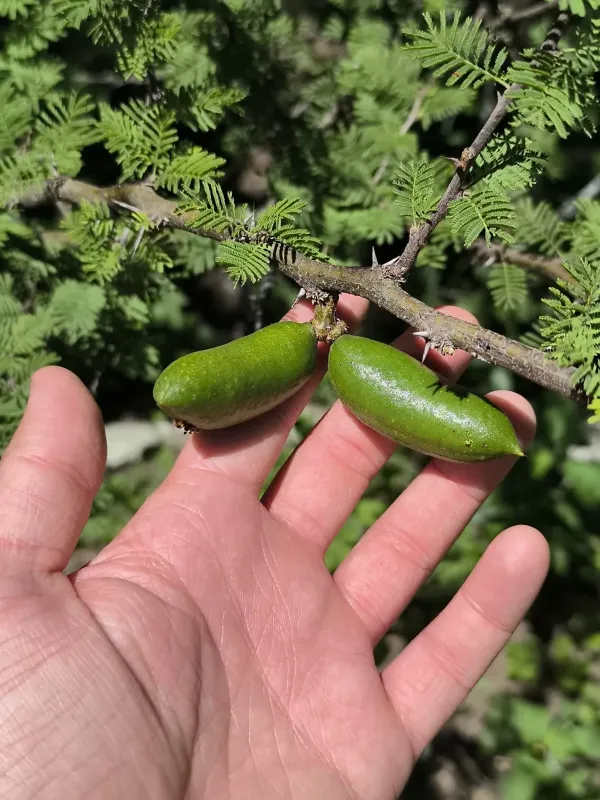
Description
Growing requirements
Caven acacia, known botanically as Vachellia caven, is a hardy leguminous tree native to the arid and semi-arid regions of South America. It is recognized for its extraordinary ability to thrive in harsh environments where other agricultural crops would fail.
The plant demonstrates high tolerance to poor soil quality, including rocky and saline substrates. It requires full sun exposure for optimal growth and development, making it an excellent candidate for reforestation in degraded, sun-drenched landscapes.
Botanically, it typically grows as a small, thorny tree or shrub, reaching heights of up to five meters. It possesses a deep taproot system designed to access deep groundwater, which is a critical adaptation for survival in regions with significant annual precipitation deficits.
From an agrotechnical perspective, Vachellia caven is low-maintenance. It fixes atmospheric nitrogen, which helps improve the nutritional status of the soil. Planting densities should be managed to ensure adequate spacing, as excessive overcrowding can hinder individual growth.
The economic value of this species lies in its high-quality charcoal production and its utility in preventing soil erosion. As an ecological pioneer, it stabilizes landscapes and contributes significantly to the biodiversity of arid ecosystems.
Main diseases and pests
The primary threats to Caven acacia include various insect herbivores that target the foliage and seeds. While mature trees are highly resilient, severe infestations can significantly impact the productivity of younger, developing stands.
Fungal diseases are rare but can occur in settings with improper drainage. Waterlogging is detrimental to the root health of this species and creates a high risk of root rot, which is often fatal if not mitigated immediately.
In certain regions, domestic livestock pose a risk by grazing on young shoots. The tree's protective thorns provide a natural deterrent, but physical barriers are often necessary during the initial stages of plantation establishment to prevent overgrazing.
Management of these threats is typically focused on preventative silvicultural practices rather than chemical control. Maintaining site hygiene and ensuring proper soil aeration are the most effective ways to manage potential outbreaks of pests and pathogens.
The plant's natural adaptation to extreme stress gives it an evolutionary advantage, making it one of the most robust species for reforestation projects. Careful selection of site conditions remains the best defense against long-term threats to the crop.