
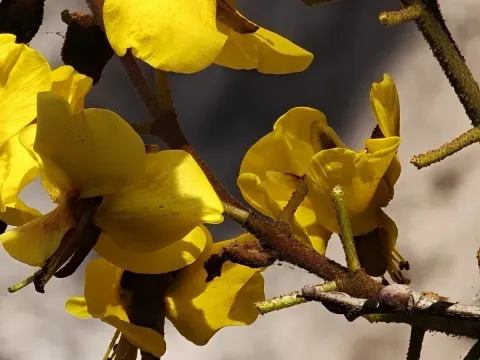
Cenostigma
Cenostigma
Cenostigma is a genus of flowering plants belonging to the family Fabaceae (Leguminosae), specifically the subfamily Caesalpinioideae. These plants are native to the tropical regions of South America, thriving particularly in arid and semi-arid forest environments.
What the section contains


Cenostigma
Botanically, Cenostigma species are characterized by their pinnate leaves and distinctive floral structures. These trees have evolved to possess efficient physiological mechanisms, allowing them to remain productive even during extended periods of drought common in their natural habitats.
The climate requirements for Cenostigma focus on high average annual temperatures and a tolerance for significant seasonal variations in rainfall. They are well-adapted to tropical conditions where extreme heat is balanced by their ability to regulate moisture loss effectively.
Soil requirements are relatively specific: the plant demands well-drained, porous soils. It is highly intolerant of waterlogging, which can lead to root degradation. These trees are typically found in sandy or rocky substrates where they can establish deep root systems to access groundwater.
Economically, Cenostigma is valued for its hard and durable timber, which serves various construction purposes. Beyond timber, these leguminous trees are highly beneficial for soil enrichment through nitrogen fixation, making them an excellent choice for agroforestry and land reclamation projects.
The primary threats to Cenostigma involve insect defoliators that can significantly impact the leaf area of young trees. Regular monitoring during the nursery stage is crucial to prevent early-stage damage that could stunt the overall growth of the plant.
Fungal infections in the root zone are a significant risk, particularly if the plant is grown in compacted or overly damp soil conditions. Good agricultural practice, focused on maintaining proper soil structure and drainage, is the best defense against these pathogens.
Xylophagous insects, which bore into the woody stems, can pose a long-term threat to mature specimens. Maintaining tree health through balanced nutrition and proper spacing helps the plant develop natural defenses against wood-boring pests.
Overcrowding within plantations can create microclimates conducive to fungal diseases, as poor airflow keeps leaves damp for longer durations. Adhering to recommended planting densities is essential for ensuring healthy development and disease suppression.
Weed management during the establishment phase is vital to minimize competition for nutrients and water. Effective clearing and mulching techniques are recommended to protect the young trees during their most vulnerable period of early development.