
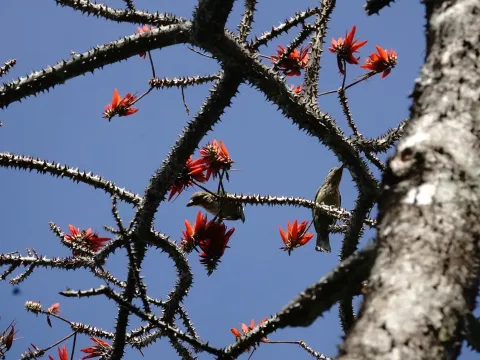
Variegated coral tree
Erythrina variegata
The variegated coral tree is a member of the Fabaceae family, widely recognized for its vibrant red inflorescences and distinctive foliage. It is a fast-growing tree that functions as a nitrogen-fixing legume.
What the section contains
Variegated coral tree
Originating from the tropical regions of Asia, this plant thrives in diverse environments ranging from sea level to coastal areas. It is particularly noted for its high tolerance to saline conditions and poor soils.
The optimal climate for this species is tropical or subtropical, requiring full sun exposure and consistent warmth. It cannot withstand frost or cold snaps, which limits its outdoor cultivation to warm regions.
Regarding soil requirements, the tree prefers well-drained loams but can adapt to a variety of textures. In agricultural practice, it is often utilized in agroforestry to improve soil fertility and provide shade.
Propagation is typically achieved through hardwood cuttings, which root easily under high humidity conditions. Seed propagation is also possible but requires scarification due to the hard seed coat.
The most severe threat to Erythrina variegata is the Erythrina gall wasp, which causes significant leaf drop and can weaken the tree if not managed. Biological control is often preferred in large plantations.
Spider mites are common during dry seasons, leading to foliage chlorosis and stunted growth. Maintaining adequate soil moisture and humidity can help mitigate this risk significantly.
Fungal diseases like root rot are prevalent in soils with poor drainage. Once established, these diseases are difficult to treat, making preventative soil management essential for health.
Scale insects can infest stems and branches, sucking sap and secreting honeydew, which promotes sooty mold. Regular pruning and canopy cleaning are recommended to maintain plant vigor.
Integrated pest management strategies involve monitoring population peaks of insects. Using targeted systemic insecticides should be a last resort to protect beneficial organisms within the ecosystem.