
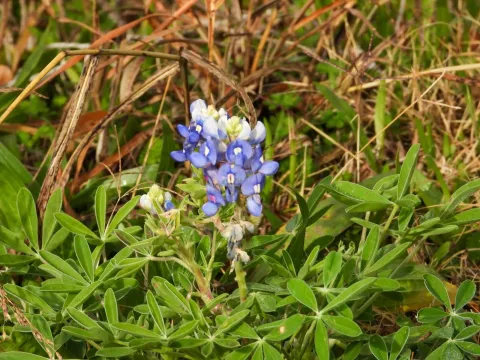
Texas bluebonnet
Lupinus texensis
Texas bluebonnet is an annual legume species native to the southern United States, renowned for its hardiness and distinctive inflorescences. This plant belongs to the Fabaceae family and is highly valued for both its ornamental properties and its ability to improve soil health through nitrogen fixation.
What the section contains
Texas bluebonnet
Sowing should ideally take place in late autumn or early spring, depending on the local climate. Seeds possess a hard seed coat, making scarification a common practice to break dormancy and ensure faster, more uniform germination rates across the planting site.
Optimal sowing depth is shallow, typically around 1 to 2 centimeters, which provides the necessary contact with soil particles while allowing sufficient light for the developing seedlings. Maintaining proper spacing is crucial to prevent the overcrowding that often leads to increased disease pressure.
The choice of site for sowing is paramount, as the plant demands full sun exposure to flourish. Placing the crop in shaded areas usually results in weak, spindly stems and significantly reduced flowering, which undermines the primary objective of the cultivation efforts.
Successful establishment of the crop also depends on the local temperature profile. While the plant is quite resilient, it prefers cool to mild conditions during its initial growth phases, allowing the root system to become deeply established before the onset of extreme seasonal temperatures.
Texas bluebonnet thrives in well-drained, sandy, or loamy soil conditions. It is extremely sensitive to waterlogged soils, which can cause root rot in a very short period. Ensuring excellent drainage is the most critical management factor for this specific legume crop.
Drought tolerance is one of the most significant traits of the species, as its deep taproot facilitates water uptake from deeper soil profiles. This makes it an ideal candidate for low-maintenance agricultural systems and xeriscaping projects in semi-arid regions.
The crop does not require heavy fertilization, particularly nitrogen, due to its symbiotic relationship with rhizobia bacteria. These bacteria fix atmospheric nitrogen in root nodules, naturally enriching the soil and reducing the need for synthetic fertilizers for subsequent crops in a rotation.
The ideal soil pH for this species is slightly acidic to neutral. Periodic testing of the planting area is recommended to ensure that the nutrient balance remains conducive to legume growth, as highly alkaline soils can sometimes inhibit the efficiency of nitrogen fixation.
Temperature management is generally passive, as the plant is adapted to regional cycles. However, extreme heat can shorten the flowering period, so timing the crop cycle to coincide with cooler seasonal windows is a standard practice for maximizing biomass and floral displays.
Fungal diseases, such as powdery mildew and anthracnose, represent the primary threat to the crop, especially under conditions of high humidity or poor airflow. Regular scouting and preventative fungicide applications can mitigate these issues effectively during the active growing season.
Aphids and various weevil species are the most common pests that can damage foliage and developing buds. Integrated pest management strategies, including the use of targeted insecticidal soaps, help to maintain population levels below the economic threshold for damage.
Root-related pathologies are often exacerbated by irrigation errors. Since the plant is adapted to drier conditions, excessive watering can create an environment favorable for pathogens, leading to sudden wilting and plant death, even in otherwise healthy-looking stands.
Viruses transmitted by insect vectors can pose a long-term risk to crop health. Using certified disease-free seeds and managing weed populations within and around the fields help to reduce the presence of potential reservoirs for these viral pathogens.
Invasive weed species can outcompete seedlings during the early stages of development. Clean field preparation and timely mechanical weeding are essential to ensure the crop establishes dominance and achieves its full potential without unnecessary competition for light and nutrients.