
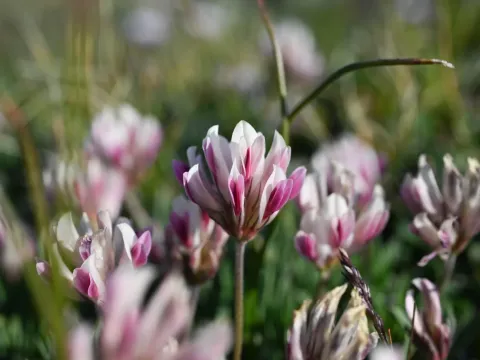
Thick-leaved clover
Trifolium dasyphyllum
Thick-leaved clover (Trifolium dasyphyllum) is a perennial herbaceous plant belonging to the Fabaceae family, native to the mountainous regions of Western North America.
What the section contains
Thick-leaved clover
This species is highly specialized for alpine environments, characterized by its ability to thrive in thin, nutrient-poor, and rocky soil compositions at high altitudes.
Botanically, it is distinguished by its low-growing, mat-forming habit, which serves as a protective mechanism against the harsh alpine winds and extreme weather conditions.
The culture requires excellent soil drainage, as its root system is prone to damage if exposed to waterlogged conditions, reflecting its evolution in steep mountain slopes.
In terms of climatic adaptability, this clover species is remarkably resilient to extreme thermal fluctuations, being able to withstand freezing temperatures common in high-altitude habitats.
Root rot is the most significant threat to Trifolium dasyphyllum when introduced to gardens or field cultivation, primarily due to improper drainage and moisture management.
Various insects, such as leaf-feeding weevils and aphids, may colonize the plants, although they are generally more resilient in their natural alpine environment.
Fungal diseases like powdery mildew can become a concern in environments where humidity levels exceed the plant's natural comfort zone, specifically in low-lying areas.
Soil compaction must be avoided to prevent mechanical damage to the root structure, which subsequently weakens the plant and invites opportunistic pathogens.
Integrated pest management strategies are recommended, focusing on maintaining optimal spacing to ensure sufficient airflow and preventing excessive moisture accumulation around the crowns.