
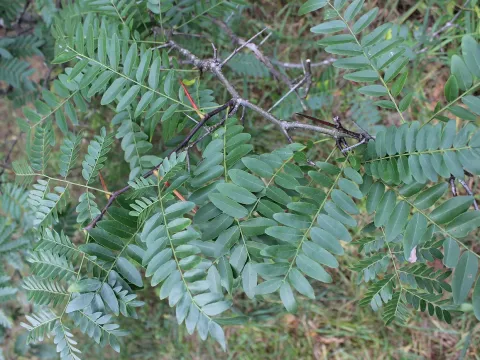
Texas honeylocust
Gleditsia texana
Texas honeylocust, a member of the Fabaceae family, is propagated primarily through seeds. Sowing typically occurs in the spring, following a mandatory cold stratification period to break the seed's dormancy and ensure successful germination.
What the section contains
Texas honeylocust
Seeds possess a hard, impermeable seed coat, which necessitates scarification before planting. This process, whether mechanical or involving brief hot water treatment, allows moisture to penetrate the seed and triggers the physiological processes of sprouting.
In nursery settings, seeds are sown at a depth of 2–3 cm into well-aerated, fertile substrate. Providing adequate spacing is essential to minimize seedling competition and ensure uniform development of the root system during the first growth cycle.
Transplanting saplings to a permanent location is best performed in early spring before active bud break. Proper site preparation, including organic soil amendments, significantly increases the tree's resilience and initial growth rate.
Young trees require consistent irrigation during the first two growing seasons to become established. Mulching around the base helps retain soil moisture and suppresses competing weeds, providing the plant with the nutrients it needs to thrive.
The species demonstrates high ecological plasticity, preferring open, sun-drenched environments. While it can tolerate partial shade, full sun exposure is necessary for the development of a strong, dense canopy and overall plant health.
Texas honeylocust thrives in deep, well-drained loamy soils but shows remarkable adaptability to various soil compositions, including those with slightly alkaline pH levels. It exhibits moderate drought tolerance once the root system is fully matured.
This tree is highly valued for its urban adaptability, showing resistance to soil compaction and air pollutants. These characteristics make it a robust choice for landscape architecture in challenging environments such as city parks and boulevards.
Adequate soil fertility is essential for sustained growth. Regular applications of balanced fertilizers during the early spring can boost vegetative mass production and strengthen the tree against seasonal climatic stressors.
While the tree displays significant cold hardiness, young saplings may require supplemental protection against severe winter winds and fluctuating temperatures during the first few years of their life cycle.
Though naturally resilient, Texas honeylocust is susceptible to pests common within the Gleditsia genus. Psyllids, for example, can cause foliage curling and minor growth retardation if left unchecked in large populations.
Fungal infections, most notably powdery mildew, can pose a risk under high humidity and poor air circulation. Maintaining a well-pruned canopy is the primary cultural practice to mitigate the spread of such diseases.
Stem and wood-boring insects may target stressed or weakened trees. Regular monitoring and pruning of dead or decaying wood are critical measures to prevent infestations from spreading to healthy portions of the tree.
Root rot is a potential threat when planting in poorly drained sites or soils prone to waterlogging. Proper site selection and drainage management are foundational to ensuring the long-term vitality of the root system.
Integrated pest management, combining physical sanitation, natural biological controls, and targeted chemical interventions when necessary, provides the most effective protection for maintained specimens.