
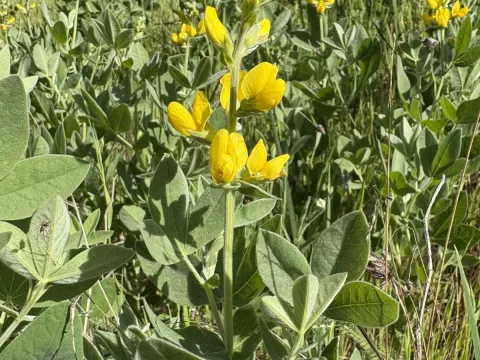
Thermopsis
Thermopsis
Sowing Thermopsis is best performed in late autumn or early spring. The seeds require a period of stratification to break dormancy and ensure uniform germination, making autumn sowing a highly effective practice.
What the section contains


Thermopsis
Seeds should be planted at a depth of 2–3 centimeters. Maintaining soil moisture during the germination phase is critical, as the hard seed coat requires consistent contact with damp soil to initiate development.
In commercial operations, row spacing is typically set between 45 and 60 centimeters to facilitate mechanical weeding and ensure optimal plant density.
The plant population should be managed to ensure that approximately 10–12 healthy plants remain per linear meter by the second year of growth.
As seedlings emerge slowly, it is vital to manage weeds diligently during the first season, as the slow early growth of Thermopsis makes it vulnerable to competition from invasive grasses and broadleaf weeds.
Thermopsis belongs to the Fabaceae (legume) family and is known for being a robust, hardy perennial capable of thriving in harsh continental climatic conditions.
The crop prefers well-lit, open fields. It demonstrates significant frost tolerance and can endure extreme temperature fluctuations typical of its natural range in Central Asia and Siberia.
While not overly demanding, the plant performs best in light, sandy, or loamy soils that offer excellent aeration. Waterlogged or acidic soil conditions should be avoided to prevent root rot and stunted growth.
As a legume, it forms symbiotic relationships with nitrogen-fixing bacteria, which allows it to thrive in nutrient-poor soils by accessing atmospheric nitrogen.
Effective management in the first two years includes regular cultivation between rows. Once established, the dense canopy is usually sufficient to suppress most competing weeds.
The economic yield of Thermopsis depends on the age of the stand and moisture availability. Typically, harvesting begins in the third year of plant development.
Biological productivity for the aerial parts (herbage) can reach 1.5–2.0 tons per hectare in dry matter when optimal agricultural practices are followed.
Yield peaks between the fourth and fifth year of growth. After this, productivity may gradually decline, signaling the need for field rotation or replanting.
The concentration of medicinal alkaloids is highly dependent on the plant's phenological stage, with the highest yield of active compounds occurring at the budding to early flowering phase.
Post-harvest processing, including shade drying or mechanical drying at temperatures not exceeding 50 degrees Celsius, is essential to preserve the pharmacological potency of the raw material.
Thermopsis is generally hardy, but it can be susceptible to powdery mildew, especially in regions with high humidity or frequent rainfall during the summer months.
Root-feeding pests, such as various species of weevils, pose a significant threat by damaging the root system and interfering with the plant's ability to fix nitrogen.
Aphid infestations can occur in certain seasons, feeding on tender foliage and sap, which can significantly reduce the overall biomass and quality of the harvested crop.
Weed management remains the primary abiotic challenge, particularly in the establishment phase, where slow growth leaves the seedlings exposed to rapid-growing competitive weeds.
Disease control strategies focus on crop rotation, ensuring adequate soil drainage, and promoting plant vigor through proper site selection and soil management.
Harvesting is performed by mowing the aerial biomass. Machinery should be calibrated to a cutting height of 5–7 centimeters above the soil level to prevent damaging the crowns.
The timing of the harvest is critical; the crop should be mown during peak bloom to ensure the maximum chemical profile is captured in the harvested herbage.
Harvested material should be gathered and processed immediately. Prolonged exposure to direct sunlight on the field can degrade the sensitive active compounds within the plant tissues.
Transport must be handled with care to minimize mechanical damage to the stems and leaves, as the loss of plant parts can reduce the overall medicinal quality of the batch.
The field must be allowed to recover before winter dormancy. Improper timing of the last cut can weaken the root system, negatively impacting the vigor of the next season's growth.