
Kotschy Sainfoin
Onobrychis kotschyana
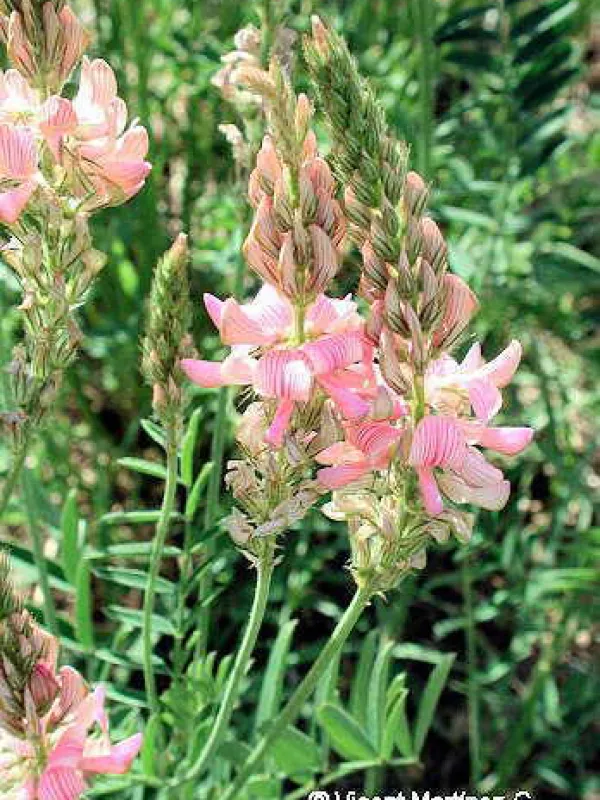
Description
Sowing dates
Kotschy Sainfoin is a perennial legume species that is typically sown in early spring. The ideal time for planting is when the soil temperature reaches 5 to 8 degrees Celsius, ensuring favorable conditions for germination.
For successful stand establishment, a well-prepared seedbed is necessary. Seeds should be sown at a depth of 3 to 5 centimeters, which ensures sufficient moisture availability for the developing embryo and proper anchorage for the root system.
The seeding rate varies based on local conditions but generally ranges from 60 to 100 kilograms per hectare. This density ensures a uniform crop stand capable of outcompeting weeds during the initial stages of development.
In many regions, this crop is included in multi-species grass mixtures. This practice enhances the overall stability and biodiversity of the field, improving the nutritional quality of the resulting hay.
Post-sowing soil compaction (rolling) is a recommended practice to improve soil-to-seed contact. This step is particularly critical in regions prone to dry springs, as it helps pull deep moisture toward the seed.
Growing requirements
This crop is highly valued for its extreme drought tolerance and adaptation to harsh environments. It thrives on poor, rocky, and calcareous soils where other forage crops struggle to maintain productivity.
Kotschy Sainfoin is sensitive to waterlogged conditions and high water tables. Poor drainage can lead to root rot and severe stand thinning, so selecting well-drained slopes or upland sites is essential for long-term viability.
Abundant sunlight is crucial for the optimal development of this plant throughout the growing season. As a light-demanding species, it does not tolerate shading, and therefore, it should not be grown as an understory crop.
The soil pH should ideally be in the neutral to slightly alkaline range. On acidic soils, development is significantly hampered, necessitating the application of lime prior to seeding to optimize nutrient availability.
Known for its high winter hardiness, Kotschy Sainfoin can withstand significant temperature fluctuations. This makes it a reliable crop in continental climates where winters are characterized by extreme cold and unstable snow cover.
Yield
The yield of Kotschy Sainfoin biomass is dictated by management practices and local rainfall patterns. With proper care, the crop can provide one to two productive cuts per season, maintaining nutritional quality throughout.
Peak biomass production is typically achieved during the second and third years after establishment. A deep, robust taproot system allows the plant to efficiently recover after mowing, ensuring sustainable production for several years.
Nutritionally, this crop is a powerhouse of protein, calcium, and essential vitamins. It is widely recognized for its non-bloating properties, making it safer for grazing livestock compared to alfalfa or clover.
Seed production is an important aspect of its management. Pollination by bees and other insects significantly enhances seed yields, making the protection of pollinator habitats near sainfoin fields highly beneficial.
Depending on the environment, dry matter yields can range between 15 to 30 tonnes per hectare. Timely application of phosphorus and potassium fertilizers can further enhance long-term yield potential and plant health.
Main diseases and pests
Weevils are among the most significant pests affecting Kotschy Sainfoin, as they specifically target the flower buds and developing seeds. Integrated pest management strategies are necessary to prevent substantial yield losses.
Powdery mildew and various leaf spot diseases are common pathogens under humid conditions. These diseases spread rapidly in dense stands with poor air circulation, underscoring the need for proper planting density and field hygiene.
Root rot fungi can become problematic if the soil remains excessively moist or if the field is repeatedly over-grazed. Maintaining a healthy, vigorous stand is the best defense against these soil-borne pathogens.
Minor pests such as aphids may occasionally impact the foliage, particularly during the early vegetative stages. Scouting fields during the budding stage allows farmers to identify and respond to infestations before they cause damage.
A well-managed stand is inherently more resilient to biotic stressors. By avoiding over-grazing and ensuring that the plants are not mechanically stressed, the producer can keep the crop healthy and productive for many years.
Harvesting
The harvest for hay should occur at the onset of the flowering stage. At this phenological phase, the plants provide the best balance between biomass weight and protein content, ensuring the highest feed quality.
Mowing should be performed at a height of approximately 6 to 8 centimeters above the ground. This preserves the basal nodes and ensures that the plant has enough energy reserves for rapid regrowth after the harvest.
Rapid field drying is essential for preserving the leaves, which are the most nutrient-dense part of the plant. Over-drying or mechanical mishandling in the swath can lead to leaf shatter, causing significant losses of protein.
For seed collection, harvesting should take place when the pods turn a brownish color. Delaying the harvest increases the risk of seed shattering, as the pods release the seeds quite easily once they reach full maturity.
Modern harvesting equipment, including advanced mowers and high-pressure balers, is crucial for efficiency. Using optimized machinery reduces harvest time and preserves the nutritional integrity of the stored forage.