
Bird's-foot restharrow
Ononis ornithopodioides
Bird's-foot restharrow (Ononis ornithopodioides) is an annual herbaceous plant belonging to the Fabaceae family. It is native to the Mediterranean basin, perfectly adapted to dry and sunny habitats.
What the section contains
Bird's-foot restharrow
This crop thrives in well-drained, limestone-rich soils. It is highly drought-tolerant, making it an excellent candidate for agricultural land where water availability is limited and other crops fail to establish themselves.
The plant requires plenty of direct sunlight and long, warm growing seasons to reach full maturity. Soil aeration is critical, as root systems do not tolerate waterlogging and can succumb to fungal issues in heavy, clay-heavy, or sodden soil.
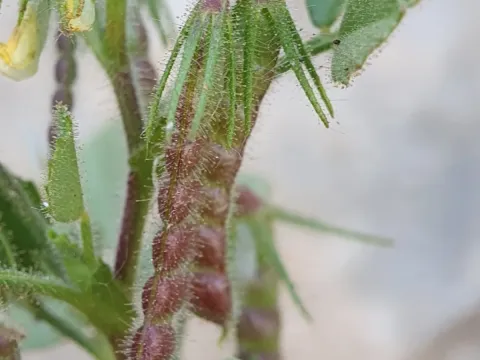
Botanically, the plant is distinguished by its small, yellowish-pink flowers and unique seed pods that look like a bird's foot. It is a nitrogen-fixing species, which helps improve overall soil health and nitrogen content when grown in a crop rotation system.
Its primary agricultural use is as a forage crop for livestock, particularly in arid climates. The biomass produced is highly nutritious for small ruminants, providing essential proteins during the dry summer months when green pasture is scarce.
The main threats to this crop include soil-borne pathogens and various forms of root rot, which typically appear if drainage is poor or if the same crop is grown on the same field for multiple consecutive years.
Pests such as weevils and aphids represent a significant challenge for Ononis cultivation. These insects target leaves and pods, potentially reducing the overall yield quality and quantity if left uncontrolled.
Effective management includes maintaining a strict crop rotation cycle to break the life cycles of common pests and pathogens. This is crucial for sustaining the health of the fields over the long term.
Fungal diseases like rust can develop if moisture levels remain high for extended periods, especially in areas with poor ventilation. Ensuring adequate space between plants during sowing is a key prevention method.
Monitoring the fields during the early vegetative stage is essential for identifying weed competition. Because the plant grows relatively slowly at the start, manual or mechanical weed suppression is necessary to ensure the crop establishes itself successfully.