
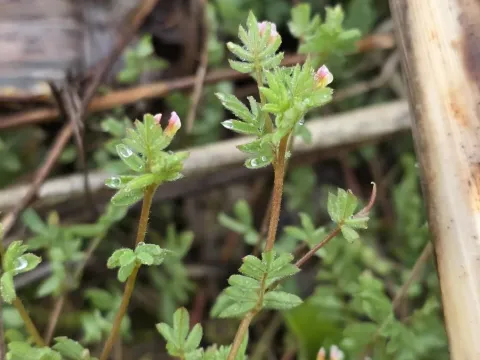
Bird's-foot
Ornithopus perpusillus
Bird's-foot (Ornithopus perpusillus) is an annual herbaceous plant belonging to the Fabaceae family. Sowing is typically conducted in the spring, as soon as soil temperatures become optimal for seed germination, usually in late April or early May.
What the section contains
Bird's-foot
Successful germination requires sufficient soil moisture. In regions with dry springs, it is recommended to roll the soil immediately after sowing to ensure firm seed-to-soil contact, which accelerates emergence.
The seeding rate for Ornithopus perpusillus depends on the intended use, whether for green fodder or seed production. A row-seeding method is standard, with row spacing generally maintained at about 15 centimeters.
Seed planting depth should be shallow, as the seeds are quite small. It is recommended to sow them at a depth of no more than 1.5 to 2 centimeters into a well-prepared seedbed that is free of weeds.
Using high-quality seed material is essential. Ornithopus perpusillus exhibits excellent germination energy, provided the seeds have been properly dried and cleaned of impurities during the post-harvest processing stage.
This crop prefers light sandy and sandy-loam soils with moderate acidity, where other legumes often struggle. It thrives in nutrient-poor environments, enriching the soil with nitrogen through symbiosis with root-nodule bacteria.
The plant demonstrates high ecological plasticity but is highly sensitive to waterlogging. Excessive moisture in the root zone can quickly lead to crop failure and the development of fungal infections.
It is a light-demanding crop, so growers should avoid shading it with taller plants. Sufficient sunlight is crucial for active photosynthesis and the accumulation of the biomass required for forage production.
In terms of climate, Ornithopus perpusillus is adapted to temperate conditions. While it possesses moderate drought tolerance, it requires consistent moisture during prolonged summer droughts to maintain vigorous growth.
Agronomic requirements include regular weed control during the early stages of vegetation. As the seedlings develop slowly, minimizing competition from faster-growing weeds is vital for the crop's establishment.
The agricultural use of Ornithopus perpusillus is primarily focused on producing high-quality pasture forage and hay. The plant is characterized by high protein content, making it a valuable component in livestock feed rations.
Beyond its use as fodder, the crop is widely employed as a green manure to improve soil structure. Its well-developed root system facilitates nitrogen fixation, which significantly enhances the fertility of plots for subsequent crops.
Biomass yield is directly dependent on soil fertility and the level of agronomic care provided. With proper sowing density and effective weed protection, significant yields suitable for harvesting at the budding stage can be achieved.
A biological feature of the plant is its ability to recover quickly after grazing. This makes bird's-foot a valuable component in pasture mixtures designed for small ruminants and other livestock.
Incorporating this crop into crop rotations significantly reduces the need for synthetic nitrogen fertilizers for winter cereals. The economic viability of its cultivation is supported by low seed costs and the plant's overall adaptability.
Like many legumes, Ornithopus perpusillus can be affected by specific pests, such as weevils. These insects damage both vegetative organs and reproductive structures, which can decrease total crop productivity.
Among diseases, root rots and powdery mildew are the most common. These typically develop due to poor management practices, such as excessive sowing density or waterlogged soil, which create an environment conducive to pathogens.
To prevent disease spread, proper crop rotation is essential. It is not recommended to plant Ornithopus perpusillus on the same plots for consecutive years to avoid the buildup of pathogens and legume-specific pests in the soil.
Disease prevention includes seed treatment with approved fungicides, especially in regions with a high risk of infection. This protects young seedlings during the most vulnerable stage of their growth cycle.
Monitoring fields during active growth allows for the timely identification of pest infestations, enabling localized control measures. Maintaining spatial separation from other legume crops also helps mitigate the risk of pest damage.
Harvesting for green fodder is best performed during the peak flowering stage or when the first pods begin to set. This is when the plant reaches its maximum nutritional value, with optimal protein content in the dry matter.
When making hay, it is important to ensure the mown biomass dries quickly to prevent leaf loss. Since the leaves contain most of the nutrients, mechanical handling during raking and tedding should be performed gently.
If the goal is seed production, harvesting should begin once the majority of the pods have darkened. It is crucial to avoid over-ripening, as pods can shatter, leading to significant yield losses during threshing.
Post-harvest processing involves cleaning seeds of debris and weed seeds, followed by drying them to a moisture content suitable for safe long-term storage in a cool, dry environment to maintain viability.
Modern harvesting technology utilizes specialized headers and combine settings designed for fine seeds. Precise adjustment of the threshing mechanism minimizes seed cracking and ensures the production of high-quality planting material.