
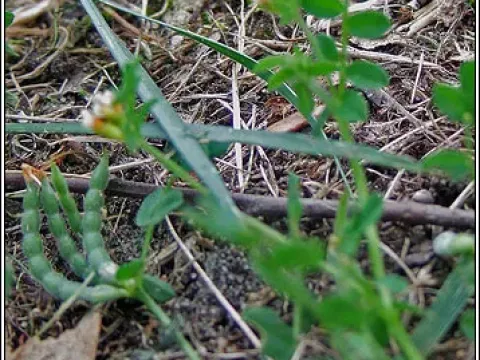
Bird's-foot
Ornithopus
Sowing Bird's-foot is typically carried out in early spring when soil temperatures reach 5–8 degrees Celsius to capitalize on available soil moisture.
What the section contains


Bird's-foot
The seeding rate should be adjusted based on the soil texture and the intended final use, such as grazing, hay production, or green manure.
Seeds are relatively small, requiring precise sowing at a depth of 1–2 centimeters to ensure proper germination and seedling establishment.
Compacting the soil lightly after sowing is highly recommended to improve seed-to-soil contact and speed up the emergence of young sprouts.
In regions with mild winters, autumn sowing can be a viable alternative to maximize early spring growth, provided the seedlings can establish before frost.
Bird's-foot, belonging to the Fabaceae family, is highly valued for its ability to thrive on poor, sandy, and acidic soils where other legumes fail.
This crop is a nitrogen-fixing plant, which significantly contributes to soil fertility and helps reduce the need for synthetic nitrogen fertilizers.
The plant performs best in sunny, well-lit environments and is sensitive to heavy shading from surrounding vegetation or dense canopy structures.
It displays moderate drought tolerance but requires adequate moisture levels during the peak growing season to ensure optimal biomass production.
While adapted to various soil conditions, Bird's-foot prefers well-drained locations and is intolerant to waterlogged or flooded soil conditions.
The total yield of Bird's-foot is highly dependent on environmental conditions, particularly rainfall distribution during the active vegetative growth phase.
When cultivated for forage, the crop produces nutrient-rich biomass that is palatable to livestock and maintains quality throughout its growth cycle.
Yields can be maximized by implementing rotational grazing or timely harvesting to promote secondary regrowth after the initial cut.
Seed production is generally stable, although the pods' tendency to shatter requires careful timing to minimize harvest losses during maturation.
As a green manure crop, Bird's-foot provides significant organic matter addition to the soil, improving its physical structure and water-holding capacity.
Common fungal diseases, such as powdery mildew and leaf spot, can affect Bird's-foot, particularly during prolonged periods of high humidity.
Pests like weevils can cause substantial damage to young plants by feeding on leaves and stems, requiring early monitoring and intervention.
Integrated pest management strategies should be prioritized, focusing on cultural practices to minimize the reliance on chemical pesticides.
Crop rotation remains the most effective method for controlling soil-borne pathogens and preventing the buildup of specific pests over consecutive seasons.
Maintaining adequate plant density helps in suppressing weed growth, thereby reducing the competition for nutrients and water in the early stages.
Harvesting for hay or green forage is most effective at the full flowering stage to ensure the highest protein content and digestibility.
Care must be taken during the curing process to preserve the fine leaves, which are the most nutritious parts of the plant, preventing excessive shattering.
For seed production, harvesting should begin as soon as the majority of pods turn brown to avoid premature seed dispersal in the field.
Proper machinery settings, including adjusting drum speed and airflow, are essential to avoid damage to the seeds during the threshing process.
Post-harvest handling requires drying the seed to safe moisture levels to ensure longevity and high germination rates for future planting seasons.