
Big-headed clover
Trifolium macrocephalum
Description
Sowing dates
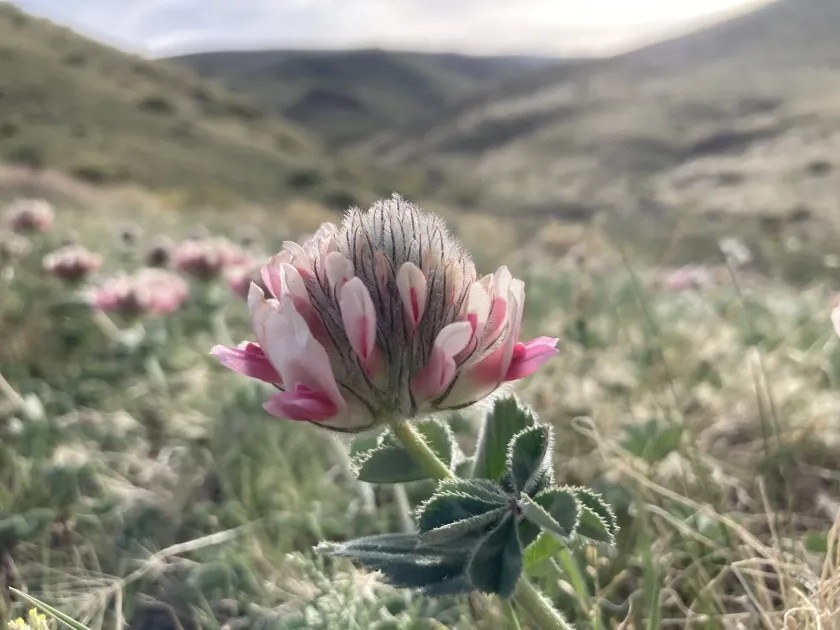
Big-headed clover (Trifolium macrocephalum) is a perennial herbaceous plant belonging to the Fabaceae family. Native to the Western United States, this species is well-adapted to rocky, high-altitude terrain.
The sowing process requires significant attention to seed preparation. Because the seeds are often dormant due to a hard coat, mechanical or chemical scarification is necessary to achieve uniform germination.
Planting typically takes place in early spring. The soil temperature should be stable, preferably between 10 and 15 degrees Celsius, to support active seedling development.
Drill seeding is recommended to ensure consistent spacing. Planting at a depth of approximately 1.5 to 2 centimeters is optimal for establishing strong early-stage growth.
Adequate soil moisture after planting is crucial. Following sowing, light rolling is often applied to ensure proper seed-to-soil contact and moisture retention during the critical germination phase.
Growing requirements
The plant thrives in well-drained, porous soils such as sandy loams. Heavy soils with poor drainage are unsuitable as they promote root rot and limit the plant's natural longevity.
Climatically, it is a hardy species capable of surviving cold winters. However, it requires full sun exposure to flourish and produce high-quality foliage and seed heads.
Soil pH should ideally be neutral or slightly acidic. If the soil is too alkaline, micronutrient availability might be impaired, leading to visible signs of stress in the leaves.
Nutrient management focuses on phosphorus and potassium. As a legume, this clover can fix nitrogen from the atmosphere, reducing the need for intensive nitrogen fertilization.
Wind-protected sites are preferred. While the plant is drought-tolerant once established, supplemental irrigation during extreme dry spells can significantly increase biomass yields.
Main diseases and pests
Fungal pathogens such as powdery mildew are common threats in environments with high humidity or stagnant air circulation within the plant canopy.
Insect pests, including root-feeding weevils and aphids, can significantly reduce productivity. Early detection is essential for maintaining crop health and vigor.
Cultural control methods, such as appropriate crop rotation cycles and removing debris after harvesting, effectively break the life cycles of most soil-borne pathogens.
Weed management in the first year is vital, as the clover grows slowly during the establishment phase and can be easily outcompeted by aggressive grasses or weeds.
Integrated pest management strategies should be prioritized over blanket chemical applications to preserve local pollinator populations, which are attracted to the clover's large flowers.
Harvesting
Harvesting for forage is usually conducted during the late budding stage, before full flowering, to ensure the highest protein content and digestibility for livestock.
When harvesting for seed production, growers wait until the heads have fully matured and turned brown, taking care to minimize shattering losses during mechanical reaping.
The timing of the harvest is critical; cutting too early reduces seed viability, while waiting too long increases the risk of loss due to birds or inclement weather.
After cutting, the biomass should be dried properly to prevent mold development in storage. Field drying requires at least several days of fair weather.
Strategic harvesting cycles help the plant maintain its root reserves, ensuring that the clover can persist and produce subsequent growth in the following season.