
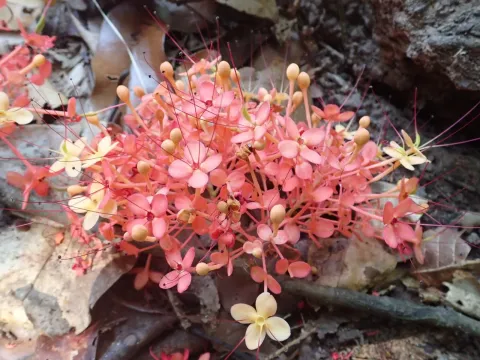
Saraca declinata
Saraca declinata
Saraca declinata is a prominent member of the Fabaceae family, widely known for its vibrant, dense inflorescences. This evergreen tropical tree typically reaches significant heights in its native humid forest environments.
What the section contains
Saraca declinata
The species is indigenous to Southeast Asia, specifically thriving in regions like Thailand and Malaysia. It is a moisture-loving plant that excels in areas with high annual rainfall and consistent, warm tropical temperatures.
Soil requirements for Saraca declinata include well-draining, nutrient-rich substrates. While the plant appreciates high moisture, waterlogging is detrimental, necessitating a porous soil structure to prevent root rot.
Light intensity is a critical factor in the plant's health. While it can tolerate full sun when mature, young specimens perform significantly better under filtered light or partial shade to avoid foliage burn.
Agrotechnical management involves careful irrigation and mulching to keep the root zone cool. The species does not exhibit significant cold tolerance and requires strictly controlled greenhouse conditions in non-tropical climates.
The primary horticultural use of Saraca declinata is as a high-value ornamental tree. It is extensively utilized in tropical landscape architecture to create focal points in public gardens and resorts.
The flowers of the tree are not only aesthetically pleasing but also carry ecological significance, acting as a crucial food source for various species of nectar-feeding insects and birds.
Traditional uses involve the application of bark or leaf extracts in local ethnobotanical practices, though these applications are generally small-scale and localized within the native range.
Propagation is mostly achieved through seeds. Because seeds lose viability rapidly, professional nurseries ensure immediate sowing in specialized germination media to maintain high success rates.
Ongoing maintenance includes structural pruning to encourage a broader crown, which increases the total display area of the striking orange-to-red flowers during the peak blooming season.