
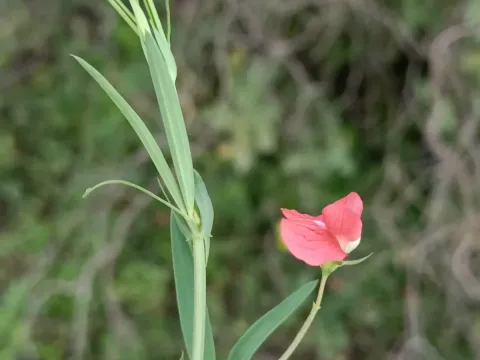
Amphicarpic vetch
Lathyrus amphicarpos
Amphicarpic vetch (Lathyrus amphicarpos) belongs to the Fabaceae family and is an intriguing subject for research due to its unique biological trait — amphicarpy. Sowing is typically performed in early spring, once soil temperatures reach 5–8 degrees Celsius, ensuring sufficient moisture for seed germination.
What the section contains
Amphicarpic vetch
The seeding rate for this crop is determined by soil type and the intended use, whether for grain or green fodder. Seeds are usually planted at a depth of 3–5 cm to prevent desiccation of the seedbed and to ensure uniform emergence.
Optimal plant density is crucial for successful cultivation, as overcrowding can lead to lodging. The crop performs best in fields free of weeds, making pre-sowing soil preparation a vital component of the management technology.
Crop rotation should exclude other legume species to prevent the accumulation of host-specific pathogens in the soil. It is recommended to sow this crop following winter cereal grains, which typically leave the field clear of weeds.
Nitrogen fertilizer application should be moderate, as this legume can form symbiotic relationships with nitrogen-fixing bacteria. The focus remains on phosphorus and potassium applications to stimulate root system development and reproductive growth.
Lathyrus amphicarpos has moderate climatic requirements, preferring regions with adequate moisture and mild temperatures. The plant shows good tolerance to short-term spring frosts, which allows for a wider geographical range for its potential cultivation into northern regions.
Soil preferences include well-drained loams or sandy soils with a neutral to slightly alkaline pH. The crop performs poorly in waterlogged areas and acidic soils, which require mandatory liming before sowing.
The plant's key botanical feature is its ability to produce seeds both in aerial pods and in subterranean pods developing on specialized shoots. This is an adaptive mechanism that allows the species to survive in drought conditions or under intense grazing pressure.
Light requirements are relatively high; shaded plants tend to grow spindly, which reduces their overall resilience and productivity. The best growth occurs in open, well-ventilated areas where high air humidity is avoided, as it often promotes fungal infections.
An essential development factor is the presence of specific soil microflora to facilitate successful nodule formation. If the crop is being grown on a field for the first time, inoculation of seeds with appropriate Rhizobium strains is highly recommended.
The yield potential of amphicarpic vetch is determined by the balance between aerial vegetative mass and subterranean seed production. Subterranean seeds are typically larger than aerial ones, providing a robust reproductive strategy even when environmental factors negatively impact the aerial parts.
Agricultural use is centered on obtaining high-protein grain, which can be utilized in the feed industry. The protein composition of the seeds is comparable to other legumes, making it a valuable component in livestock rations.
The green mass of the plant is highly palatable and nutritionally dense, suitable for both fresh grazing and hay production. However, the crop's primary value lies in its ability to produce yield in environments where other legumes might struggle to thrive.
Yield potential can vary significantly depending on regional growing conditions and implemented protection technologies. In favorable years, the crop provides a stable harvest that is easily collected once the aerial parts have matured and dried.
Ongoing breeding efforts are focused on synchronizing the maturation of aerial pods. This advancement will allow for more efficient mechanical harvesting and reduce the losses that typically occur during traditional gathering methods.
Major diseases threatening this crop include anthracnose and various root rot complexes, which often develop under high humidity. Disease prevention relies heavily on the use of high-quality, treated seed materials.
Pests such as pea leaf weevils can pose a significant threat by damaging seedlings and young foliage. In hot, dry periods, aphids may infest the crop, sucking sap from the plant tips and hindering overall development.
Integrated pest management (IPM) is essential, including regular population monitoring and the application of insecticides during critical developmental phases. Chemical applications should be avoided during peak flowering to protect pollinating insects.
Damage to subterranean seeds by soil-dwelling pests like wireworms can substantially reduce reproductive success. Treating seeds with systemic insecticides before planting serves as the most effective preventative measure at early growth stages.
Strict adherence to crop rotation and spatial isolation from other legume crops help maintain a lower infection background. Timely weeding also plays a crucial role by removing alternative hosts for viruses and insect vectors.
Harvesting amphicarpic vetch requires specialized attention due to the presence of subterranean pods, which are more difficult to retrieve than standard grain crops. Split-harvesting technology is often utilized, involving the mowing of aerial parts followed by mechanical excavation of the soil.
Harvest timing is determined by the condition of the aerial pods, which must reach maturity with characteristic coloration and firm structure. Optimal moisture content at harvest should remain below 14–16% to prevent mold development during storage.
Post-harvest, seeds require thorough cleaning and drying in specialized facilities. This is critical, as subterranean pods may hold higher moisture levels and contain soil debris that could jeopardize the quality of the stored harvest.
Modern research is focused on developing mechanical solutions to simplify the retrieval of the subterranean fraction. Specialized equipment, such as modified plows and harvesters, is being designed to operate effectively in light soils while preserving the integrity of the buried seeds.
During storage, it is vital to maintain appropriate temperature and humidity controls. Properly cleaned and dried seeds can be stored for extended periods without significant loss of nutritional or sowing quality.