
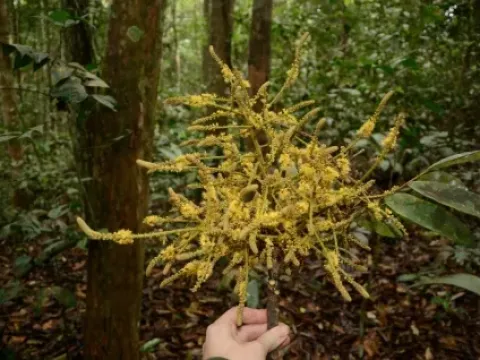
Amphimas
Amphimas
Amphimas is a genus of large deciduous trees belonging to the Fabaceae (legume) family. In their natural environment, these trees can reach impressive heights of 30 to 40 meters, often developing straight and sturdy trunks.
What the section contains

Amphimas
The native range of this tree is concentrated in the moist tropical forests of West and Central Africa. They thrive in deep, fertile soils and require a tropical climate characterized by consistent warmth and abundant annual rainfall.
This species exhibits significant ecological adaptability, though it is most productive in semi-evergreen forest zones. It demands well-drained soil conditions, as waterlogging is detrimental to the development of its extensive root system.
In agroforestry systems, Amphimas is valued for its rapid biomass accumulation during the early stages of growth. Proper maintenance, including the reduction of competing vegetation, is crucial for seedlings to establish themselves effectively.
Understanding the microclimatic preferences of this tree is essential for its inclusion in reforestation programs. Optimal planting density helps in promoting healthy growth and ensures the longevity of the stand.
The primary economic use of Amphimas lies in its valuable timber. The wood is recognized for its moderate density, strength, and resistance to warping, making it a reliable material for construction and manufacturing purposes.
With a pleasant color range from yellowish-brown to reddish-brown, the wood is highly sought after for furniture production, flooring, and interior finishings. It offers an excellent finish, which is highly appreciated in craftsmanship.
Beyond solid wood products, Amphimas is used to produce high-quality plywood and veneers. The efficiency of the wood in manufacturing processes contributes to its economic viability as a forest crop.
Yield levels depend heavily on sustainable management practices and the age of the plantation. Selective harvesting cycles are employed to maintain the ecological balance and ensure the regeneration of the population.
Furthermore, Amphimas trees serve as a vital component in windbreaks and shade-providing buffers within agricultural landscapes, indirectly supporting the productivity of surrounding food crops.
Amphimas, like many tropical species, is susceptible to various fungal pathogens that affect the bark and roots, particularly in environments with high humidity and poor air circulation.
Pests, particularly termites and wood-boring insects, represent a significant threat to the structural integrity of mature trees. Monitoring and integrated pest management are necessary to prevent losses in timber quality.
In nursery settings, seedlings are often affected by leaf spot diseases. Ensuring adequate spacing and light exposure is essential to mitigate these issues and maintain the health of the young plants.
The primary threat to the species remains deforestation and unsustainable land use. Global efforts focusing on the protection of these habitats are critical to ensuring the survival of the species in the wild.
Changing environmental conditions, such as prolonged droughts, can weaken the resistance of the trees, making them more vulnerable to opportunistic infections and pest outbreaks that can compromise entire stands.