
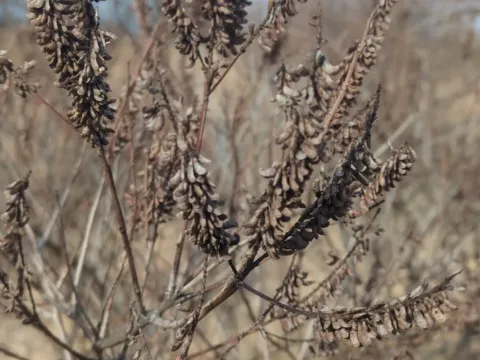
Amorpha
Amorpha L.
Seeds of Amorpha typically require a stratification period of 1 to 2 months at low temperatures to break dormancy and ensure high germination rates. Sowing is best performed in early spring as soon as the soil is workable and has reached moderate temperatures.
What the section contains

Amorpha
When sowing in field conditions, seeds should be placed at a depth of about 1–2 cm. Providing adequate moisture after planting is crucial to help the seedlings establish a strong root system during their first weeks of development.
For ornamental or hedge planting, vegetative propagation via stem cuttings is highly effective. Cuttings taken in mid-summer from healthy semi-hardwood shoots usually root well when kept under high humidity and shaded conditions.
Spacing is an important consideration for plantation establishment; rows should be spaced 60–80 cm apart to allow for proper air circulation and to facilitate future maintenance such as weed management during the establishment phase.
Fall sowing is also an option in regions with mild winters. The seeds undergo natural stratification in the ground during the cold months, leading to uniform germination when temperatures rise in the following spring.
Amorpha is a member of the Fabaceae (legume) family, known for its exceptional hardiness and adaptability. It thrives in sunny locations and is highly drought-tolerant, making it an excellent choice for stabilizing sandy soils and eroded slopes.
The plant is not particularly demanding regarding soil fertility; it grows well in poor or rocky soils where many other species would struggle. Its ability to fix atmospheric nitrogen allows it to improve the soil quality over time, benefiting the surrounding ecosystem.
Climate adaptability is one of Amorpha's strong suits. While it prefers warm climates, it exhibits good frost resistance. However, in regions with very harsh winters, young plants might require mulching around the root zone to prevent damage to the crown.
Minimal maintenance is required once the plant is established. Annual pruning is beneficial to remove dead or overly dense branches, which encourages more vigorous growth and better flowering in the following season.
The use of chemical fertilizers is generally discouraged as the plant's nitrogen-fixing capabilities provide most of the necessary nutrition. Excessive nitrogen can lead to vegetative growth at the expense of flower production, reducing its value as a honey plant.
Amorpha is primarily valued in agriculture as a high-quality honey plant. During the flowering period, it attracts a large number of pollinators, producing a light, flavorful honey that is highly prized by beekeepers for its unique profile.
The biomass production of Amorpha is significant in agroforestry applications. As a fast-growing shrub, it is frequently used for windbreaks and shelterbelts, which protect adjacent high-value crops from wind-induced damage and soil erosion.
In the pharmaceutical industry, the plant is harvested for its seeds and foliage, which contain phytochemicals like rotenone. These compounds have been utilized for various medical and biological applications, making the species an economically viable commercial crop.
Ecological benefits often represent the primary "yield" in soil reclamation projects. By binding loose soil with its dense root system, Amorpha prevents the degradation of land, allowing for the eventual rehabilitation of neglected or damaged landscapes.
While not a primary source of timber, the wood can be utilized for small-scale projects or biofuel purposes when regular pruning or clearance of overgrown patches is conducted to maintain the vigor of the plantation.
Amorpha is notably resistant to most common plant diseases, largely due to its robust physiology. When planted in well-drained soil with adequate sunlight, the risk of fungal or bacterial infections remains extremely low throughout the growing season.
Aphids are the most common pests encountered, usually appearing on the soft, young growth during peak spring activity. In most cases, natural predators like ladybugs effectively keep aphid populations under control without human intervention.
The most serious threat to the longevity of an Amorpha plantation is waterlogging. Poorly drained soils lead to root rot, which can kill established shrubs rapidly. Selecting an appropriate site with excellent water runoff is essential for success.
Mildew or other fungal issues might occur if the planting density is too high, preventing airflow within the canopy. Regular thinning and strategic pruning help mitigate these risks even in climates with high summer humidity.
In rare instances of significant pest infestation, using soft biological soap sprays is recommended over harsh systemic chemicals to maintain the ecological balance and ensure the safety of the pollinating bees that visit the flowers.