
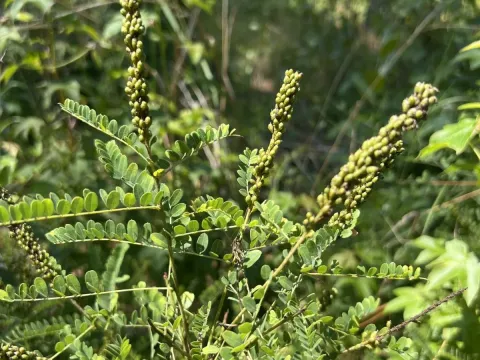
Amorpha georgiana
Amorpha georgiana
Amorpha georgiana, commonly known as Georgian false indigo, is a shrub species belonging to the Fabaceae family. It is recognized for its delicate foliage and spikes of small, deep-colored flowers that characterize many members of this genus.
What the section contains
Amorpha georgiana
The native range of this species is confined to parts of the southeastern United States. It naturally occurs in sandy soil environments, often found in pine savannas where it has adapted to nutrient-poor substrates and full sun conditions.
Successful cultivation requires a location with high solar exposure. While the plant can tolerate light shade, it thrives best in direct sunlight, which stimulates optimal flowering and promotes a compact, vigorous growth habit for the shrub.
Regarding soil, the species prefers well-drained, acidic to neutral soils with a light texture. Its root system is deep and efficient, allowing the plant to fix atmospheric nitrogen, which enhances soil fertility in its immediate vicinity.
In terms of climate, it is adapted to temperate conditions. It is relatively drought-tolerant once established, making it a sustainable choice for xeriscaping or areas where supplemental irrigation is limited during the summer months.
Like many legume shrubs, Amorpha georgiana is generally robust but can be susceptible to powdery mildew under conditions of poor airflow or high humidity. Maintaining proper spacing during planting is the best cultural practice for prevention.
Insect pests such as leaf-eating caterpillars may appear during the growing season. Integrated pest management, focusing on early detection and manual removal or the use of soft biopesticides, is recommended for healthy specimens.
Root rot is a major threat caused by poor drainage. Growers must avoid sites where water accumulates, as the plant is highly sensitive to waterlogged conditions, which can lead to rapid decline and mortality of the shrub.
Fungal infections can occasionally manifest during prolonged wet spells. Ensuring that the foliage dries quickly after rain is essential, which can be achieved through strategic pruning to keep the center of the plant open.
Proactive care, including the removal of dead or diseased stems, helps to maintain the plant's overall health and prevents the localized spread of common agricultural pathogens that affect leguminous plants.