
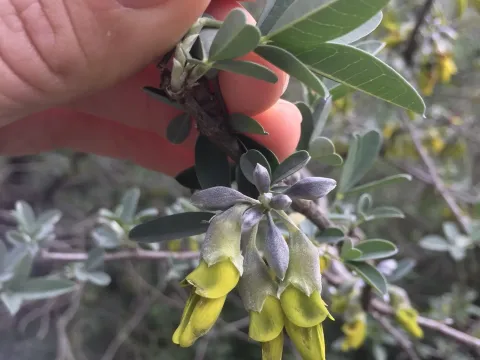
Anagyris
Anagyris
Anagyris typically propagates through seeds, which should be sown in the autumn in open ground to undergo natural stratification.
What the section contains


Anagyris
For container cultivation, seeds require a period of cold stratification in a refrigerator to ensure successful germination in the spring.
The planting medium should be light, sandy, and well-drained to avoid moisture retention that can compromise seed viability.
Sowing at a depth of 2 to 3 centimeters is recommended, ensuring that the soil is kept lightly moist until the sprouts emerge.
Transplanting seedlings to their final location should be handled carefully, as young roots are sensitive to significant disturbances.
Anagyris is a member of the Fabaceae (legume) family, well-adapted to hot, arid Mediterranean climates with mild, moist winters.
The shrub thrives in full sunlight and requires a well-exposed position to bloom effectively and maintain structural integrity.
It prefers alkaline, calcareous soils and can easily handle rocky terrain, provided there is efficient subsurface drainage.
Drought tolerance is a signature trait of the plant, allowing it to survive in regions with minimal rainfall during the summer months.
In temperate climates, it must be protected from freezing temperatures, as it is not hardy enough to withstand severe frost or snow.
The cultivation of Anagyris is not driven by food production but rather by its ecological value and pharmaceutical potential.
As a nitrogen-fixing plant, it significantly improves soil fertility in degraded landscapes, supporting overall biodiversity.
Harvesting of medicinal plant material, specifically leaves and seeds, must be performed with caution due to the presence of potent alkaloids.
The yield of biomass is dependent on the plant’s age and the density of the planting, with older shrubs producing more substantial foliage.
Seed production varies annually, heavily influenced by weather conditions during the early spring pollination period.
The primary concern for Anagyris is the development of root rot, often caused by heavy soils or excessive moisture during the dormant season.
While the plant is generally pest-resistant due to its toxic chemical composition, aphids can occasionally infest tender new shoots.
Fungal leaf spots can occur if the foliage remains wet for extended periods, necessitating good spacing to promote air circulation.
Maintaining a dry environment at the base of the shrub is the best defense against soil-borne pathogens that target the root crown.
Regular monitoring for pests and the removal of dead or damaged branches are essential for maintaining plant vigor and health.