
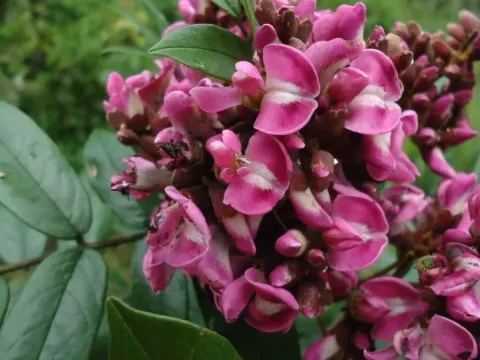
Andira anthelmintica
Andira anthelmintica
Andira anthelmintica is a tree species belonging to the Fabaceae family. It is native to tropical environments and requires specific conditions for successful propagation from seeds.
What the section contains
Andira anthelmintica
Seeds must be planted immediately after harvesting because they lose viability quickly. Germination rates are higher if the seeds are kept in a moist and warm environment.
Pre-treatment of seeds, such as mild scarification, helps break dormancy and promotes faster root development in the nursery phase.
Young seedlings require a shaded environment to prevent desiccation during their first few months of growth, gradually introducing them to full sunlight.
Transplanting to the final plantation site is best timed with the onset of the rainy season to ensure sufficient moisture for the plant to establish its root system.
As a tropical tree, it requires warm climates with temperatures consistently above 20 degrees Celsius throughout the year.
Deep, well-draining soils that are rich in organic matter are essential. The species is sensitive to waterlogging, which can easily trigger root rot.
The tree requires significant sun exposure to reach its full growth potential, although it thrives best when protected from extreme wind during its establishment.
Maintaining adequate soil humidity is crucial; while the plant is somewhat drought-tolerant when mature, young trees need consistent irrigation.
Nutrient management through the addition of organic mulch helps maintain soil health and provides the necessary minerals for long-term productivity.
The primary yield from this species is its medicinal bark, which is traditionally used for its potent vermifuge properties in herbal medicine.
Sustainable harvesting practices are essential; the bark should only be collected from mature trees that have reached at least 7 to 10 years of age.
In addition to medicinal bark, the tree provides high-quality, durable timber, which is highly resistant to insect attacks and fungal decay.
Yields can be maximized by following a rotational harvest system that allows individual trees to recover between bark stripping events.
Proper agricultural management, including canopy spacing and thinning, ensures healthy tree development and improved production of active biological compounds.
Common threats include various fungal pathogens that flourish in high-humidity areas, leading to bark rot and leaf spot diseases.
Insect pests such as borers and defoliating caterpillars can cause significant damage to young plantations if left unmanaged.
Maintaining good airflow around the trees is the most effective way to prevent the spread of most fungal infections in tropical settings.
Regular monitoring of the bark health is necessary to detect early signs of pest infestation or bacterial infections that could jeopardize the harvest.
- Regular canopy inspection.
- Use of biological pest control methods.
- Sanitary pruning of dead branches.
The harvest of the bark is typically scheduled during the dry season to prevent moisture-related spoilage during the collection and curing phases.
Workers use specialized tools to remove sections of the bark, ensuring the cambium layer is not extensively damaged to allow for future regrowth.
Once harvested, the bark must be immediately transported to a facility for cleaning and drying to maintain its pharmacological potency.
Drying is conducted in shaded, well-ventilated areas to ensure uniform moisture loss and prevent the degradation of heat-sensitive compounds.
Final packaging involves breathable materials to ensure the product remains stable during storage and shipment to processing facilities.