
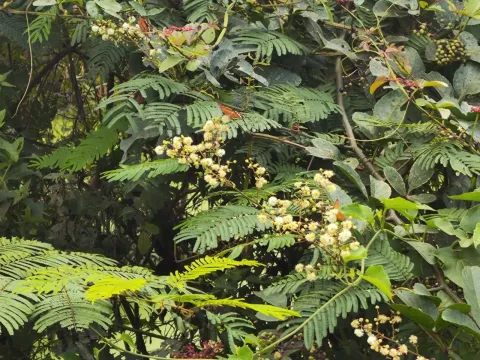
Anadenanthera
Anadenanthera
Sowing Anadenanthera seeds is typically performed at the onset of the rainy season to provide optimal moisture levels for germination. Due to the hard seed coat, pre-treatment methods such as scarification or soaking in warm water for 12–24 hours are highly recommended to increase success rates.
What the section contains


Anadenanthera
Seeds should be planted at a depth of 1 to 2 centimeters in a well-draining substrate. Maintaining a soil temperature between 25 and 30 degrees Celsius is essential for uniform and rapid germination, as the species is sensitive to cool conditions.
Nursery propagation in containers is the preferred method for producing healthy saplings. Transplanting to the field is generally carried out when seedlings reach a height of 30–50 centimeters, usually 4 to 6 months after the initial sowing.
Planting density varies based on management objectives, with a standard spacing of 3x3 meters often used in forestry plantations. This spacing ensures adequate light penetration and reduces competition between individual trees during their critical establishment years.
Regular irrigation during the first two years of growth is crucial for survival. Once the root system is established, Anadenanthera demonstrates good resilience to dry spells, making it suitable for regions with seasonal climates.
Anadenanthera is a genus within the Fabaceae (legume) family, native to tropical and subtropical regions of South America. These trees thrive in full sun and require open, unobstructed locations for optimal structural development.
The ideal climate involves consistently high temperatures with distinct wet and dry seasons. The species is well-adapted to the savanna and open woodland environments, showing a natural tolerance for seasonal rainfall patterns.
Soil requirements include deep, well-aerated, and loamy soils with a neutral to slightly acidic pH. Avoiding waterlogged or poorly drained areas is essential, as the root system is susceptible to oxygen deprivation if stagnant water is present.
As a legume, Anadenanthera forms symbiotic relationships with nitrogen-fixing bacteria. This biological feature improves soil fertility over time, positioning the tree as a valuable candidate for land reclamation and agroforestry projects.
In exposed environments, the selection of planting sites should consider wind protection. Although the timber is notably dense and strong, young saplings may require windbreaks to prevent physical damage during periods of rapid growth.
The primary economic output of Anadenanthera is its timber, known for high density, durability, and resistance to decay. Harvesting typically takes place on a 15–25 year rotation, depending on the desired dimensions and quality of the wood.
Beyond the timber, the bark of the tree is a significant source of tannins used in industrial applications. Sustainable harvesting techniques, which prevent ring-barking, allow for the extraction of these compounds without compromising the tree's health.
Seed production is another aspect of yield, particularly for forest restoration projects. Fruit maturity usually begins between 5 to 7 years of age, providing a renewable resource for nursery operations.
Integrated agroforestry systems allow for multi-layered yield, where the tree contributes to soil stability while allowing intercropping with smaller plants. This approach maximizes the utility of the land area throughout the production cycle.
Overall profitability is driven by good forest management practices, including thinning and pruning. These interventions help achieve straight, defect-free trunks, which fetch higher prices in the timber market.
Root rot caused by fungal pathogens is a significant threat in poorly drained soils. Regular monitoring and site selection that avoids water stagnation are the most effective preventive measures against these infections.
Various wood-boring insects and beetles can pose risks to the timber quality. Implementing integrated pest management (IPM) strategies, which include removing weakened individuals, helps maintain the overall health of the plantation.
Weed competition is the most significant hurdle for young plantations. Maintaining clean, weed-free zones around the base of each tree for the first three years is essential for ensuring rapid growth and reducing stress.
Leaf-eating insects can cause growth delays if infestations become severe. Biological control agents or targeted, low-toxicity interventions are recommended to preserve the tree's photosynthetic capacity during the growing season.
Wildfires are a major concern, particularly in neglected plantations during extreme drought conditions. Establishing clear firebreaks and implementing active surveillance protocols are vital for protecting the long-term investment.