
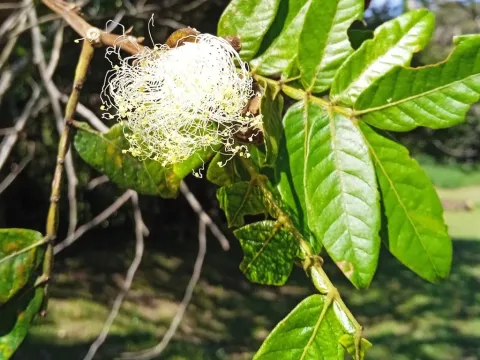
Inga sessilis
Inga sessilis
Propagation of Inga sessilis is typically achieved through seeds, which are recalcitrant and must be sown shortly after extraction from the pod to ensure viability.
What the section contains
Inga sessilis
The optimal sowing time aligns with the onset of the rainy season, providing the steady moisture required for the germination process and the establishment of the taproot.
In nursery settings, seedlings are raised in deep containers to accommodate rapid root growth, often staying in the nursery until they reach a height of approximately 40 centimeters.
Transplanting to the permanent site should be done carefully to avoid disturbing the root system, as this species is highly sensitive to root damage during the early developmental phase.
Spacing requirements vary depending on the intended use, typically ranging from 3 to 6 meters in agroforestry systems to facilitate crown development and nitrogen-fixation coverage.
Inga sessilis is a member of the Fabaceae family, native to the tropical regions of South America, where it thrives in high-humidity rainforest environments.
The tree prefers deep, fertile, and well-draining soils but exhibits remarkable adaptability to acidic and nutrient-poor soils commonly found in tropical landscapes.
It requires consistent tropical temperatures, ideally between 22 and 28 degrees Celsius, and is highly intolerant of frost or significant drops in temperature.
This species is widely recognized for its ability to fix atmospheric nitrogen through symbiotic relationships with Rhizobium bacteria, significantly improving local soil fertility.
While seedlings benefit from light shade to reduce transpiration stress, mature trees thrive under full sun, which is essential for fruit production and biomass accumulation.
The primary yield consists of the edible white pulp surrounding the seeds, which is appreciated for its sweet, cotton-like texture, commonly referred to in some regions as ice-cream bean.
The tree is a prolific producer of foliage, which serves as a critical source of green manure, helping to manage weed growth and maintain moisture in surrounding agricultural crops.
Yield stability depends on annual pruning, which encourages the growth of new, fruit-bearing branches and prevents the tree from becoming excessively tall and unproductive.
Harvesting usually occurs when pods reach full maturity and the outer shell begins to change texture, indicating the pulp is at its peak sugar concentration.
Beyond its edible fruits, the wood is sometimes utilized as firewood, and the tree's dense canopy provides an effective windbreak, protecting more fragile cultivars in the field.
Leaf-eating insects are the most common concern for young saplings, often necessitating early management interventions to prevent complete defoliation during the first year.
Fungal pathogens can occasionally affect the leaves and branches if there is insufficient air circulation or if the plantation density is too high during wet periods.
Root rot, driven by stagnant water in poorly drained soils, remains a significant physiological threat that can lead to the sudden decline of otherwise healthy trees.
Specific pests like borers may attack the stem, so maintaining the overall health and vigor of the tree is the primary defense strategy against such infestations.
Implementing a diverse polyculture approach significantly reduces the risk of pest outbreaks, as it creates a balanced ecosystem that suppresses the population of specialized herbivores.