
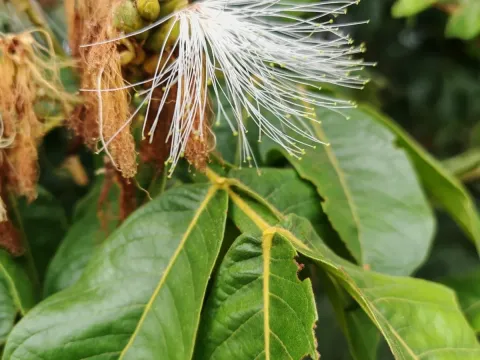
Inga vera
Inga vera
Propagation of Inga vera is primarily done through seeds, which must be sown immediately after collection because they lose viability very quickly when dried.
What the section contains
Inga vera
Seeds should be planted in nursery containers with nutrient-rich, well-draining soil and kept under partial shade to facilitate initial germination.
Optimal germination occurs at temperatures between 24 and 28 degrees Celsius, with consistent soil moisture provided throughout the period.
Seedlings are typically outplanted to their permanent location at the start of the rainy season to ensure they have enough water to establish deep root systems.
Spacing for agroforestry systems should be maintained at 3 to 5 meters between trees to allow for adequate growth and canopy management for companion crops.
As a member of the Fabaceae family, Inga vera is highly valued for its ability to fix atmospheric nitrogen, significantly contributing to soil nutrient levels.
The tree thrives in humid tropical climates, preferring areas with high annual rainfall, although it can adapt to moderate dry seasons once established.
It performs best in loamy, well-aerated soils and is relatively tolerant of slightly acidic conditions commonly found in tropical rainforest regions.
Proper canopy management through regular pruning is essential to allow light transmission to the companion crops and to produce mulch for soil enrichment.
Young trees require protection from strong winds and intense direct sunlight until the root system is robust enough to sustain the plant in open conditions.
The primary yield of Inga vera in agricultural contexts is its biomass, which serves as high-quality green manure, returning nitrogen and potassium to the topsoil.
The tree produces long, indehiscent pods containing a sweet, edible pulp that is appreciated as a minor local food source in many tropical regions.
By providing a stable shade canopy, Inga vera is crucial for the cultivation of high-quality coffee and cacao, which thrive under filtered sunlight conditions.
The wood produced by the tree is a reliable source of fuel for domestic use, particularly in rural areas where sustainable charcoal production is practiced.
Continuous biomass production after regular pruning cycles is the key economic indicator of the tree's contribution to an integrated agroforestry system.
Several leaf-eating insects and caterpillars can pose a threat to the health of the tree, potentially causing significant defoliation if left uncontrolled.
Fungal diseases, including anthracnose and various leaf spots, are common in humid conditions and can affect trees if the canopy becomes too dense.
Lack of proper management, such as neglecting pruning, can weaken the plant, making it more susceptible to opportunistic pathogens and wood-boring pests.
Integrated Pest Management (IPM) practices are highly recommended, focusing on maintaining tree vigor through timely pruning and removal of infected branches.
Due to its use in plantations where crops are intended for consumption, chemical controls should be avoided in favor of biological and cultural control methods.
Harvesting of pods is carried out manually as they reach maturity, identified by a color shift and changes in the pod texture.
Pruning for biomass production is performed periodically, typically twice a year, ensuring that the mulch is spread evenly across the plantation floor.
Wood harvesting for fuel is conducted through selective thinning or pollarding, allowing the tree to regenerate its canopy in subsequent growing cycles.
After collection, the pulp is extracted for consumption, while the seeds are separated if they are needed for propagation in the nursery.
Harvested biomass is left on the soil surface to decompose, creating a nutrient-rich layer that suppresses weeds and retains moisture for the crops.